When I started my Volkswagen Beetle a few days ago, I heard a beeping sound and noticed that one of my dashboard lights was blinking.
A few seconds later, it turned off. I learned, later on, that it had been the coolant level light.
One of the staff members from HomeTowne Auto Repair & Tire checked my vehicle’s coolant level and added fluid.
The light, he explained, turns on when the coolant goes below two metal rods that are located in the reservoir. However, each vehicle is designed differently.
Coolant Level Warning Light
A vehicle’s engine operates at the same temperature throughout the year. Its coolant level fluctuates when it’s extremely hot or cold outside.
What can cause the Coolant Level Light to turn on?
Decreases in coolant could also mean that there’s a coolant leak, which can be difficult to determine. Parts of a cooling system may leak when the vehicle is moving or when it’s stationary.
The coolant light could also be triggered if an engine is overheating.
Some vehicles have a dual purpose light, and others have a separate one.
You can learn about those specific to your vehicle by reading your owner’s manual.
Whether your vehicle has a spare tire and the location of your vehicle’s tire parts are also covered in the handbook.
HomeTowne Auto Repair & Tire is an authorized Michelin and BFGoodrich tire dealer located in Woodbridge, Virginia. Automotive repair services are performed on all makes and models, including oil changes, brakes, alignments, inspections, and computer engine diagnostics.
If you’ve owned a vehicle for a while or driven multiple kinds over the years, you might have heard someone mention catalytic converters at some point.
A catalytic converter helps reduce pollution by changing a vehicle’s exhaust emission.
One of our technicians installed a new one on a Dodge Caravan. The minivan was brought to the shop when the check engine light came on.
When checking the O2 sensors on the computer, he realized the converter wasn’t working properly.
When to replace catalytic converters
Whether a vehicle needs a new converter and indicators of a bad catalytic converter can vary.
Some converters don’t go bad. Others may be replaced if an engine misfire occurs. A misfire shoots raw fuel in the converter, which can’t switch over raw fuel. For a driver, misfires may feel like the car is running rough or struggling to accelerate.
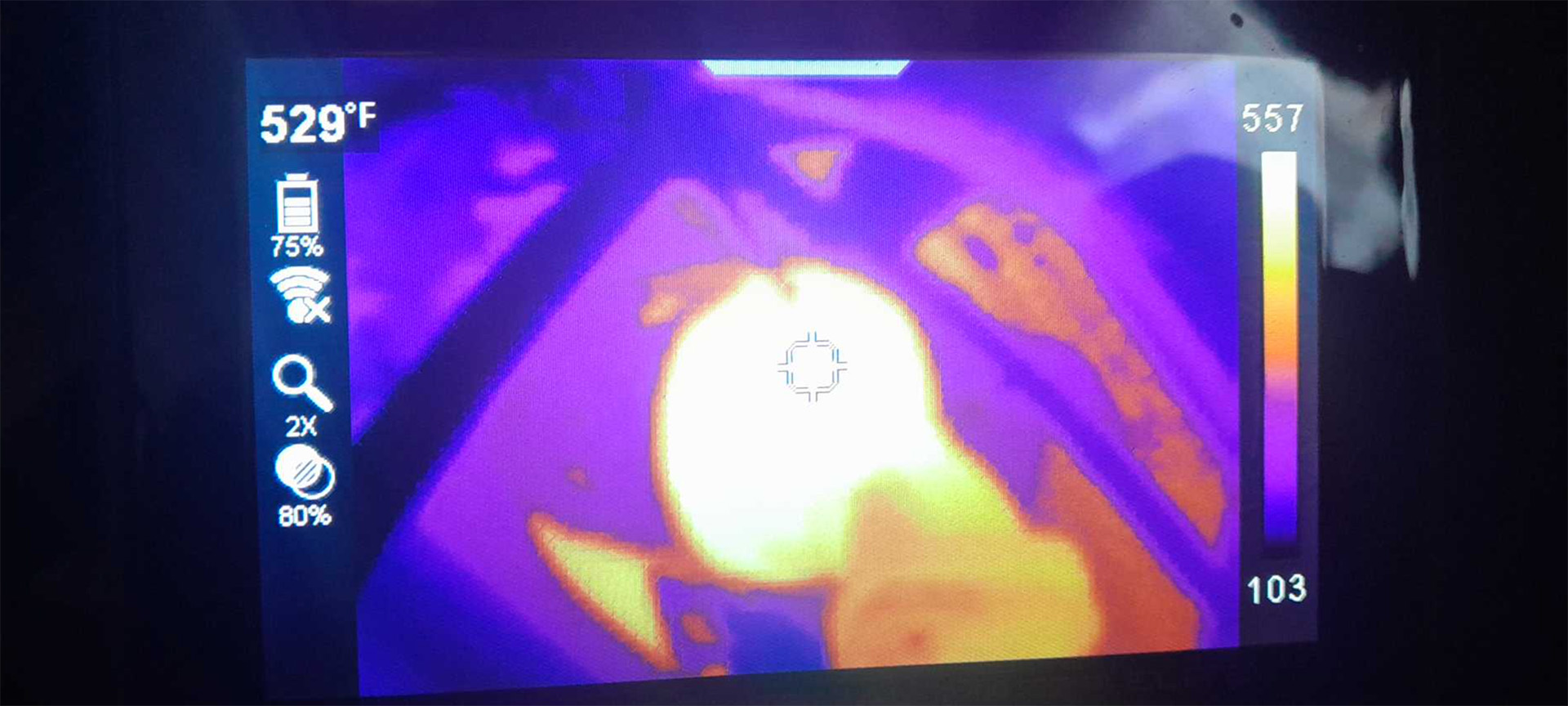
Lexus RX catalytic converter temperature
The catalytic converter’s temperature is another potential symptom that it’s going bad. Normally, the catalytic converters we check using a thermal imager are around 400 or 500 degrees. If they’re hotter than that, it means there’s a problem.
In addition to the check engine light coming on, you may notice the smell of raw fumes when a new one is needed. However, the check engine light would be your first indicator.
There are many reasons why a check engine light turns on. If it does, it’s a good idea to bring the vehicle into an auto repair shop soon.
Problems with the catalytic converter would also trigger certain codes, such as catalytic converter efficiency codes (P0420 and P0430) and misfire codes (P0300).
Catalytic converter problems
The converter could be clogged, which was the case with a Lexus RX.
To determine if it’s clogged, we need to see if a misfire is occurring on that bank because it won’t allow exhaust gas to get through. A back pressure test can also be performed to see if it’s out of specification.
For example, if your back pressure is supposed to be less than 1 PSI – meaning you have good flow – and it’s anything north of that it means you have restriction in the catalytic converter.
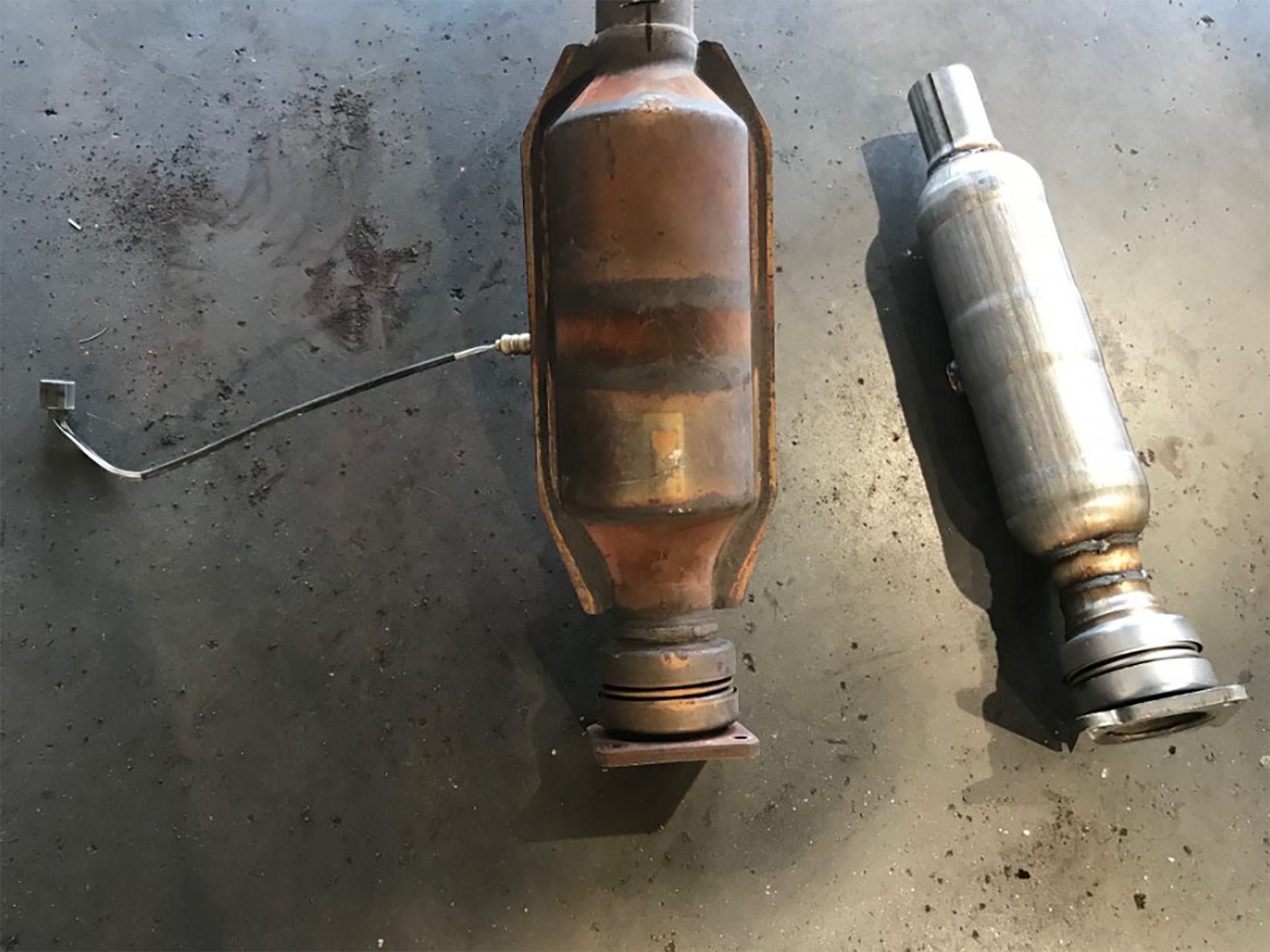
Old catalytic converter and new catalytic converter
Other converter problems include becoming worn down where they don’t create enough of a chemical reaction.
These components are built to store oxygen. They can stop doing that, causing them to go below the threshold.
Catalytic converter types
Different types of two-way and three-way converters are available. Years ago, one-way converters were used.
On the Dodge, we installed a two-way catalytic converter, which focuses on oxidizing carbon monoxide and hydrocarbons. Three-way catalytic converters do this and also reduce nitrogen oxides.
The type of converter a vehicle needs depends on the make and model, and how the engine runs.
Some cars can have multiple. Usually, there’s at least one converter for each bank. A lot of vehicles now have a downstream converter that isn’t monitored. It can’t trigger a check engine light unless it becomes clogged.
If it comes time to replace your converter, you’re better off investing in a good catalytic converter rather than a cheap one.
Cheap catalytic converters may not be made up of as much material and don’t normally last very long.
HomeTowne Auto Repair & Tire is an authorized Michelin and BFGoodrich tire dealer located in Woodbridge, Virginia. Automotive repair services are performed on all makes and models, including oil changes, brakes, alignments, inspections, and computer engine diagnostics.
Oil leaks are a common problem with some Toyota Tundra’s and Sequoia’s. HomeTowne Auto Repair and Tire has certified technicians who can help solve them.
This week, Technician Ray addressed an oil leak by replacing a camshaft cover seal. The seal was located between the camshaft housing and head of the Toyota V8 engine. To get to the seal, he needed to remove the valve covers, front cover, timing chain, and camshafts.
How to tell if a vehicle is experiencing oil leaks
Drivers can have their vehicles checked during oil changes to make sure there aren’t any issues.
Parking on a clean surface will allow them to see if a puddle is forming.
Typically, engine oil is black, brown or yellow. Check out this article to read about other reasons why a vehicle may be leaking.
HomeTowne Auto Repair & Tire is an authorized Michelin and BFGoodrich tire dealer located in Woodbridge, Virginia. Automotive repair services are performed on all makes and models, including oil changes, brakes, alignments, inspections, and computer engine diagnostics.
It’s a dreaded sound for many drivers, especially when they are trying — unsuccessfully — to start their car. This is also a telltale sign that a vehicle’s starter is going bad.
A bad starter is one reason why a car won’t start. Having a dead battery or the alternator going bad are other possibilities.
What are the symptoms of a bad starter?
Aside from a clicking noise, drivers may notice some other indicators when the starter needs to be replaced.
You may also hear a slight grinding noise. When you turn your key in the ignition, the bendex shoots out and spins at a high rate, starting the flywheel. This is what starts your car. A grinding sound could mean the bendex is wearing down.
Another giveaway is if your vehicle won’t start, even when a jumper box or a jumper cable are attached to it. If this is the case, try to jump start your car and turn it over a few times to see if you can hit it just right.
Once you get it started, drive the vehicle directly to a mechanic or auto repair shop, and don’t turn it off until you arrive. If you do, you will have to redo the process of starting your car (and this time, you may need to have it towed).
Keep in mind that sometimes a starter doesn’t show any signs of going bad. It just stops working.
What can cause it to go bad?
There are three culprits behind a starter going bad: corrosion, time and overuse.
Corrosion can build up wherever there is copper. For example, there are copper bindings in this component.
Time is your biggest factor. It’s hard to say how long a starter will last. The lifespan varies, but you can usually make it around 100,000 to 150,000 miles before needing a new one. However, we’ve seen some cars reach 300,000 miles with the original starter.
The longevity is impacted by how often you turn a vehicle on. Do you start it twice a day because you are commuting, or is it more like 6, 7, or 8 times?
Starter replacement cost
Starter replacement cost isn’t set in stone. There are quite a few variables that affect the price tag. Starters themselves can range from $200 to $1,400.
It depends, in part, on where you buy it and the type of vehicle. You will be spending a little more money on a starter for a European car or a vehicle equipped with auto start, which has more features and is a bit heavier duty.
Whether the part is new, used or remanufactured also plays a role in the cost. Remanufactured starters are typically cheaper, and sometimes that’s all you can get for some of these older vehicles.
HomeTowne Auto Repair & Tire is an authorized Michelin and BFGoodrich tire dealer located in Woodbridge, Virginia. Automotive repair services are performed on all makes and models, including oil changes, brakes, alignments, inspections, and computer engine diagnostics.
Bringing your vehicle in for the Virginia safety inspection is one way you can protect yourself and others.
The brakes of your vehicle have to be working properly in order to pass the yearly requirement.
Problems with brakes
There can’t be a soft brake pedal.
A hard brake pedal or a vehicle having a hard time stopping can be caught during the state inspection, as well.
This can be caused by a problem with the vacuum. Many vehicles now have electric pressure pumps, rather than old components, such as the vacuum brake booster.
Twisted brake hoses is another problem we keep an eye out for.
Brake hoses can become twisted for various reasons. Perhaps someone who was putting a caliper back on turned it one too many times.
The inspectors ensure that nothing is rubbing on or starting to wear through the brake hoses and they haven’t begun to develop excessive cracks.
A vehicle will fail if any active leaks or oil contamination is found.
Other parts we check
Brake pads must be at or above 2/32 inches.
We may start recommending new brakes at 3/32 or 4/32 of an inch, but they have to be under 2/32 to fail inspection. At 2/32 of an inch, brakes will technically pass, but they might not within a week or a month, depending on your driving conditions.
Rotors need a certain thickness that’s based on a manufacturer’s recommendations.
Excessive rust on the rotors is another symptom we look for.
You could have a caliper that is seized, or maybe a piston is pushing in but a caliper isn’t sliding. This means one pad isn’t making contact with the rotor and the wheel only has half of its braking ability. When we see a lot of rust built up on the rotor, it’s a good indication that the brakes aren’t working correctly.
Vehicle safety inspectors are also checking to make sure the parking brake is able to hold on a slight incline.
Some of the vehicles driven today use an electronic parking brake. They don’t even have a handle that you pull up; instead, it’s run by a computer.
There are different ways that the electronic parking brake needs to be tested during the state inspection.
The anti-lock braking system (ABS) light is another component that’s checked. A vehicle can still pass inspection, even if the yellow ABS light is on. However, it will not pass if the red brake light is on, because that could indicate a problem with the parking brake system or fluid.
If it feels like there is a mechanical issue, inspectors can take the car for a test drive.
HomeTowne Auto Repair & Tire is an authorized Michelin and BFGoodrich tire dealer located in Woodbridge, Virginia. Automotive repair services are performed on all makes and models, including oil changes, brakes, alignments, inspections, and computer engine diagnostics.
A vehicle’s timing belt goes around pulleys — the crankshaft, camshaft(s), tensioner and sometimes water pump.
When everything is correct, the belt keeps the crankshaft and the camshafts in correct timing, and if it fails on an interference engine you could catastrophic damage to the engine, such as bending the valves or breaking the pistons.
Timing Belt Routing
New timing belts should be installed between 50,000 and 105,000 miles. This depends on the make and model of a vehicle, the manufacturer recommendations, and the driving conditions.
From my personal experience, even though it has been recommended to change the timing belt at 90,000 miles, I haven’t had a problem pushing it to 105,000 miles. But these were Toyotas with two-inch-wide timing belts.
If the belt is a one-inch wide belt, you might want to keep it closer to 60,000 miles.
Not to sound derogatory, but the soccer mom — or dad — minivan gets driven hard like a high performance vehicle, just from running around and the stop-and-go driving. So you may want to stay on the manufacturer’s recommendation.
Besides, you don’t want to be stuck on the side of the road with a bunch of kids.
HomeTowne Auto Repair & Tire is an authorized Michelin and BFGoodrich tire dealer located in Woodbridge, Virginia. Automotive repair services are performed on all makes and models, including oil changes, brakes, alignments, inspections, and computer engine diagnostics.
On occasion, it may be recommended that your car receive a wheel alignment. Maybe a suspension repair was performed, your vehicle needed new tires, or certain symptoms were noticed.
Alignments can be impacted by suspension wear and road conditions, such as speed bumps and potholes.
Having this service done regularly — once a year or every 15,000 miles — can help save drivers money and prevent premature tire wear.
During car alignments, automotive experts also have a chance to check safety features and the steering ability.
Many people will call us to ask if we do wheel alignments when they’re trying to solve an issue that may not require it.
What can be mistaken for a wheel alignment issue?
Some of the concerns customers have told us about include a vibration felt in the steering wheel. This could be related to a number of items, including tires and wheel balancing. It wouldn’t have to do with the alignment.
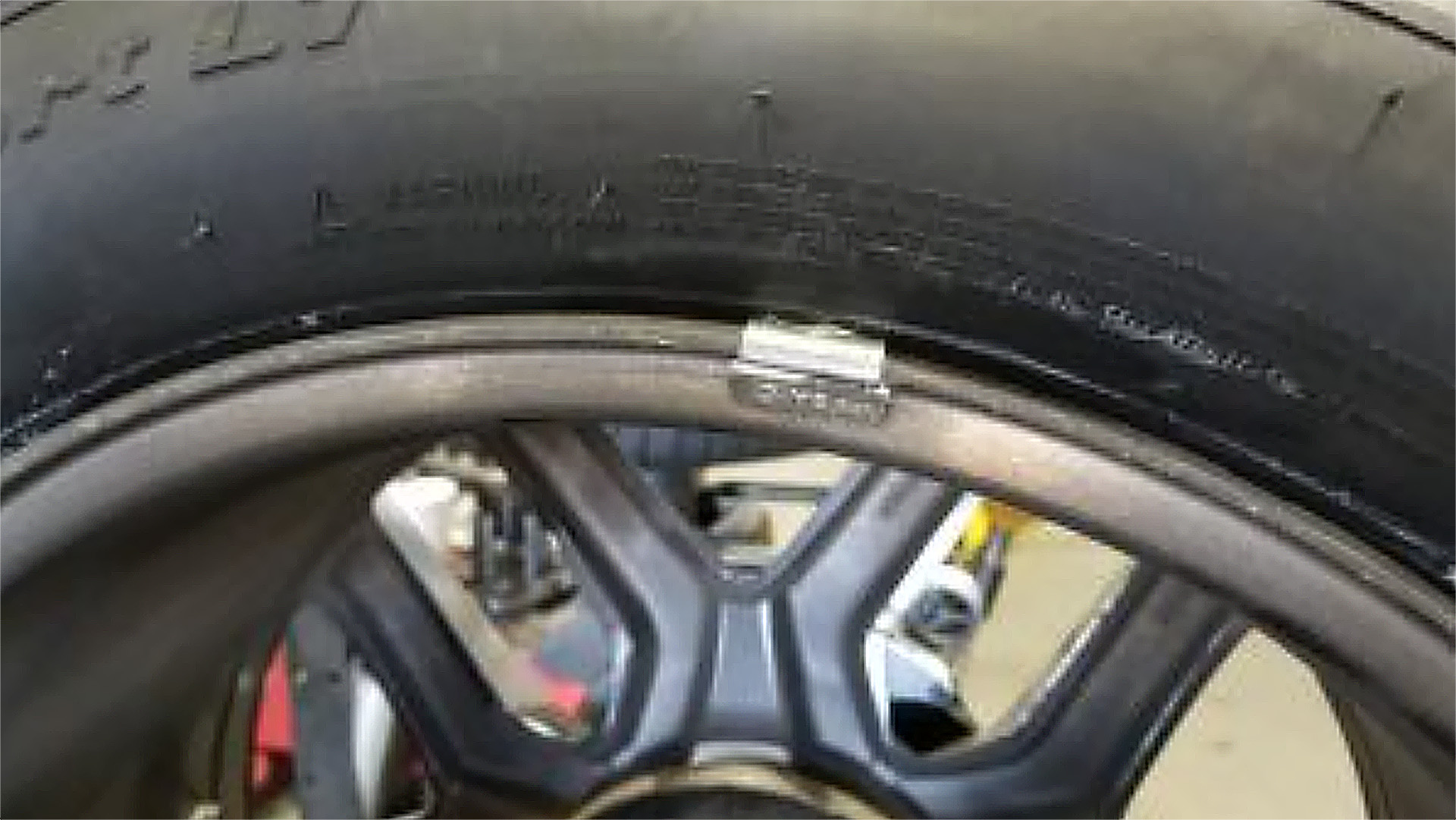
Wheel balance problem
A wheel alignment issue will have more to do with tire wear and how the vehicle tracks down the road — whether it’s going straight or pulling to one side.
To take care of a wheel balance problem, we’ll need to remove the tire, put it on a wheel balancer, and place the correct amount of weights on it.
If it’s a tire issue and a steel belt is broken, then the tire would have to be replaced.
Another symptom that is mistaken for a wheel alignment problem is when you press the brake pedal and the steering wheel starts to shudder.
This is due to the brake rotors having too much run out — or what people refer to as “warped”. The symptom can easily be mistaken for an alignment problem because so much of that vibration is transferred through the steering wheel, especially if it has something to do with the front rotors.
Bad tire alignment indicators
So, how do you know when you actually need a tire alignment?
You might not be at a shop where a technician is able to point out any problems they’re seeing.
Wheel alignment on a BMW
Maybe you were driving and experienced an odd road manner. For example, a bad wheel alignment can cause a vehicle to pull to one side.
Then, there are certain observations about a car that could hint at this problem. The steering wheel being crooked is one of them. When looking at their tires, drivers may also notice the tread isn’t wearing evenly across.
Sometimes, you don’t pick up on any of these indicators or the problems are linked to other factors.
How you can help your auto repair shop
When getting your car checked out for a concern you have, don’t worry if you’re not sure what’s going on.
Vibration can be caused by brake rotors
Just paying attention to the symptoms and when they’re happening can make a world of difference. Take note of whether the vehicle is pulling to one side or the other, how fast you’re going, or whether you’re pressing on the brake pedal.
Noises are another sign that can provide insight on potential problems.
These bits of information will be very helpful to the auto repair shop in performing diagnostic testing quickly and accurately.
HomeTowne Auto Repair & Tire is an authorized Michelin and BFGoodrich tire dealer located in Woodbridge, Virginia. Automotive repair services are performed on all makes and models, including oil changes, brakes, alignments, inspections, and computer engine diagnostics.
When moving your car from its parking spot, you may notice that a puddle has formed. A car leaking fluid could indicate a number of issues.
The location and color of the leak can help you and the car repair shop you take your vehicle to determine what is leaking and the culprit.
Types of car fluids
Antifreeze:Antifreeze can be blue, green, red or yellow, depending on the vehicle. The fluid helps prevent the engine block from freezing and cracking, or running too hot.
Brake Fluid:Brake Fluid is clear, yellow or brown. A hydraulic fluid, it applies pressure to your braking components. Don’t drive your vehicle if you notice brake fluid near the wheel well. It may be a sign that your brakes are failing.
Coolant:Coolant is used to maintain the temperature of your vehicle’s engine. When you see a puddle that’s green, orange or pink, it could indicate that your coolant is leaking. It can be red or yellow for some vehicles. The coolant can begin to leak if a water pump or hose fails. Some electric and hybrid vehicles have another coolant system that runs to the back to keep the electronics cool. You can get a coolant leak near the back of the vehicle, which most people aren’t used to.
Engine Oil: Engine oil can be yellow, brown or black. If it’s leaking, there might be a failure with a gasket or seal. If you have had an oil change recently, bring your vehicle back to the auto repair shop.
Transmission Fluid:Transmission fluid allows the transmission to shift gears, based on pressure demand. It cools the transmission and prevents contaminants from settling, as well. It appears as gold, pink, red or black. If any of these colors are seen near your vehicle, it could mean that a seal or gasket isn’t working.
You might also see clear water, and that’s generally from your air conditioner, where the moisture is condensing and the fluid is draining out from underneath your car. That isn’t something you should be concerned about.
How to address a car leaking
The steps you should take if you notice any of these fluids depends on what’s leaking, the amount, and how the vehicle is operating.
For example, if you notice a small amount of brown fluid and it’s engine oil, you could probably just drive to our Woodbridge auto repair shop. However, if the brake pedal is soft, that is a car you don’t drive.
Whether you can drive a vehicle that has transmission fluid leaking out also depends on the situation. If you have red fluid the size of a half dollar but it doesn’t seem like it wants to shift as you are putting it in reverse, we recommend you tow it.
If you aren’t sure if your vehicle is driveable, contact a mechanic or local auto repair shop. Our Woodbridge mechanics are able to perform a variety of services, including transmission repair and brake repair.
HomeTowne Auto Repair & Tire is an authorized Michelin and BFGoodrich tire dealer located in Woodbridge, Virginia. Automotive repair services are performed on all makes and models, including oil changes, brakes, alignments, inspections, and computer engine diagnostics.
Your vehicle’s dashboard contains a number of tools that share important information with you – are there any problems or is everything running smoothly?
It also houses an array of dashboard lights that have various meanings. These alerts can warn you if something is malfunctioning and the vehicle needs to be checked by a mechanic.
You may not be able to determine what a warning means at a glance, especially if it’s your first time seeing it or it doesn’t appear often.
Below is a guide for what each of the symbols indicate and any steps you should take.
What the different car dashboard lights mean
Check Engine Light: The check engine light turning on can be an indicator of numerous problems. If the vehicle has a flashing check engine light, it shouldn’t be driven and needs to be brought to a mechanic or car repair shop as soon as possible. A check engine light that is remaining solid doesn’t require immediate attention, but we suggest you schedule an appointment for the near future.
Battery Alert Light: Has your battery alert light illuminated? It could be that enough power isn’t making it to the battery. This can happen if you need a new battery or alternator, or there are electrical issues.
Anti-lock Brake System (ABS) Warning Light: The purpose of the Anti-Lock Brake System (ABS) is to make sure that a vehicle’s brakes don’t lock up during emergencies. The Anti-lock Brake System (ABS) Warning Light can clue you in when the system isn’t working correctly.
Oil Pressure Alert Light: If your oil pressure alert light appears, it’s a good idea to check your oil. (You can read about and see our video on how to check your oil in this blog post. This symbol lets you know that the engine is experiencing a decrease in oil pressure.
Tire Pressure Monitoring Light: A problem with tire pressure or a tire sensor can cause the tire pressure monitoring light to come on. Check to see where the pressure of each tire is at. (This article and video we produced explains when and how to check the tire pressure.) If you notice that all of them are lower than they should be, it may be the result of the temperature. Having one with less tire pressure could be a sign that you have a flat.
Keep in mind that there are all kinds of vehicles on the road today, which means that there can be even more alerts than the ones listed here. The dashboard lights may also look differently.
If you notice a warning light is on and you don’t recognize it, take a look at the owner’s manual. That should help you narrow it down. If you still aren’t sure what the alert means or if you need to have it addressed right away, reach out to a car repair shop near you.
HomeTowne Auto Repair & Tire is an authorized Michelin and BFGoodrich tire dealer located in Woodbridge, Virginia. Automotive repair services are performed on all makes and models, including oil changes, brakes, alignments, inspections, and computer engine diagnostics.
Ray, an automotive technician at HomeTowne Auto Repair & Tire, spent part of his Friday replacing a Ford Fusion’s alternator.
When the car came in, it’s battery light was on. He tested the battery, which was good, but the alternator wasn’t charging to its full potential.
The alternator is on the back side of the engine and you need to replace it from underneath the vehicle, which makes it more difficult than replacing the alternators of other vehicles.
To reach it, he removed the serpentine belt. The serpentine belt is one belt that goes around all of the engine accessories, including the power steering pump, air compressor and alternator.
He also checked the belt tensioner to make sure its spring pressure was working, in case he needed to replace it.
HomeTowne Auto Repair & Tire is an authorized Michelin and BFGoodrich tire dealer located in Woodbridge, Virginia. Automotive repair services are performed on all makes and models, including oil changes, brakes, alignments, inspections, and computer engine diagnostics.