

Whether you’re turning, stopping or accelerating, a vehicle’s anti-lock braking system (ABS) is operating, unnoticed.
It makes sure that the tires are moving at the same relative speed, based on the vehicle’s actions. For example, if you’re turning left to drive around a corner, the right wheels are going faster than the left ones.
The computer takes that data and sends it to the power control module (PCM) or engine control module (ECM). Information is constantly provided in real time, so if the computer needs to take over and engage the ABS to keep your wheels from locking up it will do that.
How the ABS system works
Before we go into what triggers the ABS light, we want to talk more about how the system operates.
On most cars that use four-wheel ABS, each wheel has a sensor. The sensor doesn’t just know how fast the wheel is spinning. The magnetic piece picks up high points on a tone ring that’s located in the bearing, on the axle, or on a nearby component that rotates.
Let’s say all four wheels on a vehicle are going 40 miles an hour and the car notices the brake was applied and one of the tire speeds drops down to 22 miles an hour. The ABS has a modulator valve that pulses the brake fluid, freeing up the wheel and preventing it from locking up.
What causes the ABS light to turn on?
The ABS light can appear on your dashboard for many reasons. These include:
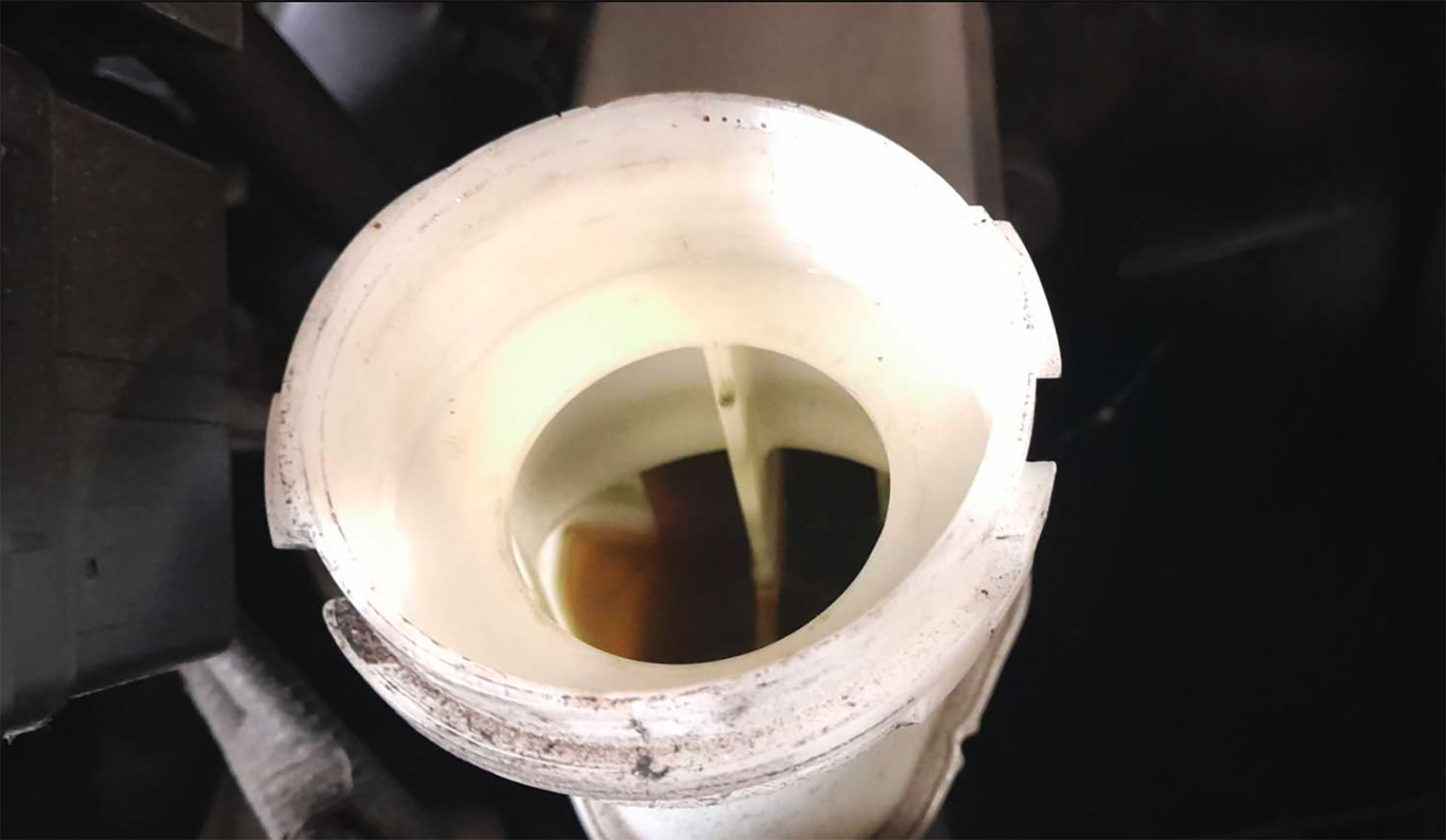
- Low brake fluid
- Bad sensors
- Flaws in the main computer
You may see this symbol when the car says it doesn’t have enough information to make a decision. If you step on the gas at a traffic light and 3 wheels are traveling at 30 miles per hour while 1 is going 0, the car will realize something is wrong and trigger the light.
A vehicle needs to perform certain calculations to determine if the information received is possible. Once it notices that some part of the system is not plausible or has an open circuit, it’s going to trigger the light every single time.
You can have an erratic signal where the ABS system is engaging when it’s not supposed to. That could mean you have a damaged tone ring or an issue with the component that sends information from the sensor.
Problems outside of the ABS can play a role, too. If your traction control system isn’t working, it’s also going to shut down the ABS system.
Connection problems can also lead to the icon appearing.
ABS sensors rarely get manipulated or move. They will sit in one spot for a really long time. We’ve seen corrosion build up so much that it pushes the sensor away from the tone ring. The light turns on because it’s an implausible situation for the computer – as if it’s saying, “I know we’re moving, but I’m barely picking up on this tone ring. Something’s wrong.”
Diagnosing ABS problems
We begin ABS diagnostics by making sure the vehicle has proper battery voltage, good battery connections, and clean terminals.
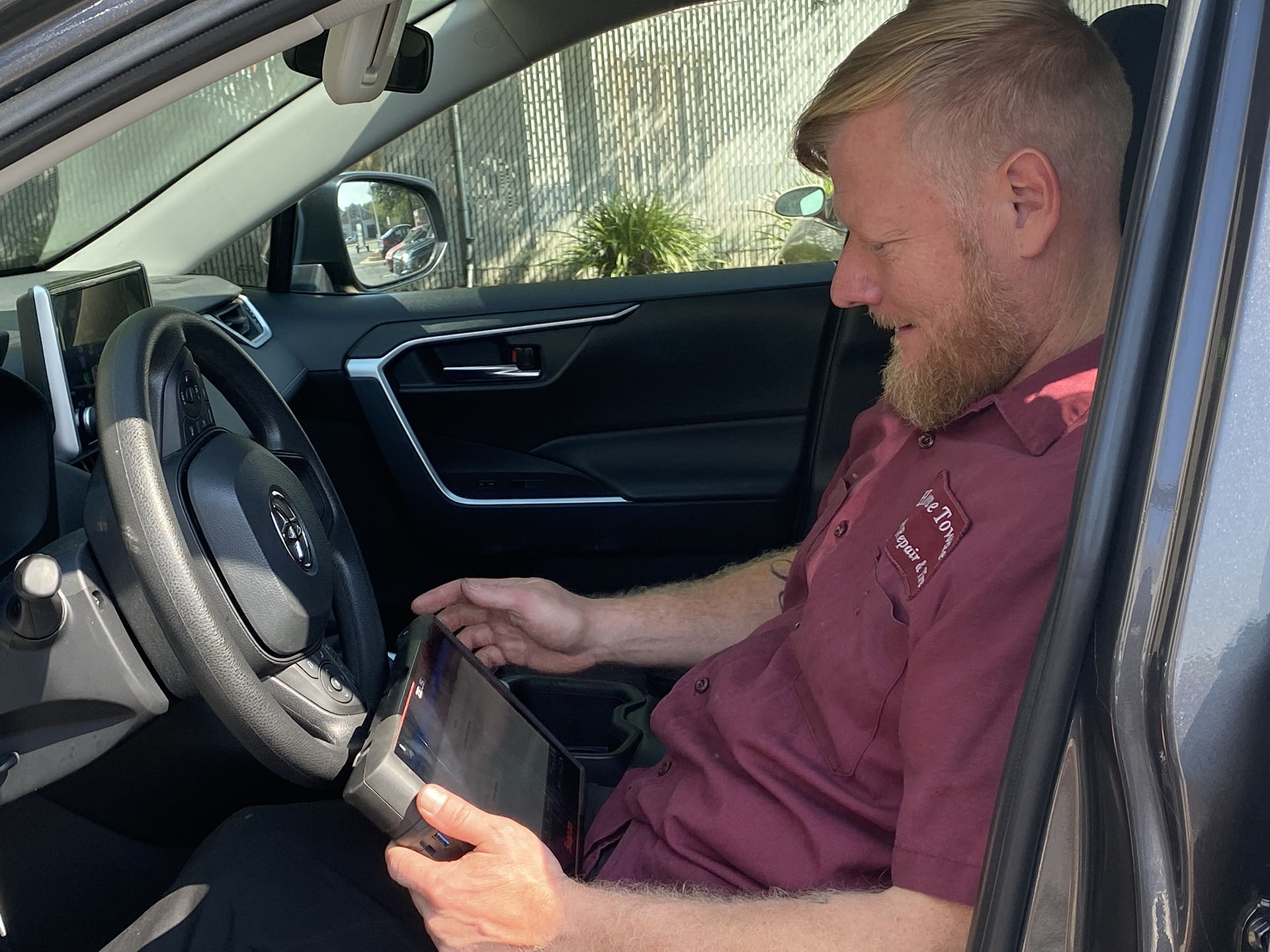
The computer is scanned while our technicians are checking these items and making sure no fuses are blown.
Any codes that appear act as a starting point. From there, the diagnostic process can branch out into various directions.
After receiving codes, we see if there’s anything implausible or multiple problems are occurring.
If your car’s ABS light has turned on, bring it by a nearby autoshop to make sure that the ABS system is working the way it was designed.
HomeTowne Auto Repair & Tire is an authorized Michelin and BFGoodrich tire dealer located near Dale City, Virginia. Automotive repair services are performed on all makes and models, including oil changes, brakes, alignments, inspections, and computer engine diagnostics.