View Post

How you can maintain your Subaru

In Vehicle Maintenance by HomeTowne Auto Repair & Tire

Subaru vehicles last a long time. 

But to keep them going, you do need to take care of them.

Subaru maintenance items

Some of the easiest things you can for Subaru maintenance are to change your oil and check the air filter to see if it needs to be replaced.

You can pull out the air filter to see if it has a lot of dirt and leaves in it. Sometimes, if the particles are big enough, you can knock it on the ground to remove them. If it still looks good enough, you can wait until your next oil change.

Another reason that the air filter needs to be checked and changed is because if the vehicle has a turbo. You don’t want dirt ruining the impeller. 

Even if your vehicle doesn’t have a turbo, you do want to have a good air filter to improve your gas mileage.

If you live in a place where there is heavy traffic and dusty conditions, it can actually reduce the amount of time between changing your air filter.

Another maintenance item is to change the fluids. An example of this would be to change the drivetrain fluids, such as the transmission and rear differential, the engine coolant, brake fluid and power steering fluid.

Depending on driving conditions, those may need to be done anywhere from 15,000 to 16,000 miles.

Keeping your tires rotated and checking the brakes can also improve your vehicle’s lifespan.

When choosing an auto repair shop to maintain your Subaru, such as oil changes, filters and fluids, don’t focus just on the price. Consider the best air filter parts, service and warranty when making your decision.

HomeTowne Auto Repair & Tire is an authorized Michelin and BFGoodrich tire dealer located in Woodbridge, Virginia. Automotive repair services are performed on all makes and models, including oil changes, brakes, alignments, inspections, and computer engine diagnostics. 

View Post

What is making that car noise?

In Suspension, Tires & Wheels, Vehicle Maintenance by HomeTowne Auto Repair & Tire

Updated May 17, 2024

Every once in a while, you might hear something out of the ordinary as you drive out of a parking spot or travel down the road.

There are many reasons why these sounds appear.

Car noise can come from anywhere, such as your suspension and tires. They may occur as engine components wear out, belts loosen, and your vehicle experiences normal wear and tear.

What you’re experiencing could be stemming from the air conditioning system or the brakes, as well.

Because they can be symptoms of car problems or indicate that maintenance is needed, it’s a good idea to pay attention to the noises you hear and have an expert look into them.

How we perform noise diagnostics

Determining the source of what’s heard can take time, especially if it can only be heard under certain circumstances.

There is a wide variety of sounds – grinding, squealing, groaning, clicking and others – and one of them could be associated with a number of parts.

Another challenge is the location of car noise, which is sometimes misleading. It might be generated in one part of the vehicle and seem to be appearing in a different spot.

Our diagnostic testing process starts with collecting information about any sounds and behaviors noticed from the customer.


Test driving a Toyota Venza.
Test driving a Toyota Venza

Then, we take the vehicle for a test drive and try to recreate it. That may mean traveling on certain road conditions, accelerating, slowing down, or making turns.

We also look for any surface level problems through a visual inspection 

Once our technicians are able to hear the sound for themselves, they can narrow down where it’s coming from.

When and where you are hearing car noise

The hardest part sometimes is trying to describe the noises to your auto repair shop. So, when something is irritating you, pay attention to when and where the noises are happening.

We’ve had instances when the car only made noises when it was below 45 degrees and they were turning left. Another common noise description is when a driver is in a parking lot and turning the wheel.

Information about how fast you’re going, how far you’re turning the wheel, and whether you’re pressing the gas pedal can help us find your problem faster.

Technician looking over car.

You should also note any other problems (even if they don’t seem related). Did any dashboard lights appear? Do you feel a vibration? Does the vehicle seem to be running rough?

Sharing details about recent events, like hitting a curb or repairs that have been performed, can also be helpful as we look into a car noise.

The other thing to consider when you’re bringing your vehicle into the shop is to schedule time to ride with the automotive technician. That way they can ride with you and you can make the exact condition that produces the noise — which saves time and money when repairing your car.

So, if you still hear noises, and you’re tired of turning the radio up to tune them out (Get it? Radio — tune … ) then try to be descriptive as you can and take a ride with your mechanic.Check out this fun video we created.

HomeTowne Auto Repair & Tire is an authorized Michelin and BFGoodrich tire dealer located in Woodbridge, Virginia. Automotive repair services are performed on all makes and models, including oil changes, brakes, alignments, inspections, and computer engine diagnostics.

View Post

Are you going on vacation?

In Vehicle Maintenance by HomeTowne Auto Repair & Tire

Are you going on vacation this year?

Here are a few maintenance checks you should make before heading down the highway.

Vacation preparation checklist

Tire tread

Prior to your trip, you want to make sure that the tire tread is thick enough. The tires are the only things that contact the road, which has everything to do with how well you go and stop. If it’s too low, it could cause issues with stopping, and you might skid across the road when it rains.

Tire tread must be at or above 2/32 of an inch. We start recommending new tires when it hits 4/32 of an inch. After that, you start to lose your wet traction.

Tire pressure

Tire pressure that’s too low could cause damage to the overall tire. If you continue to drive on a tire that’s too low, you can damage the inside of the tire — and then a perfectly good tire has to be replaced. It can impact your fuel economy, as well.

A lot of cars today have a tire-pressure monitoring system (TPMS). You may also notice symptoms when your tire pressure is low, such as sidewalls that are wider at the bottom.

You can learn about how to check your tire pressure by reading this article we wrote.

Windshield wiper blades

Windshield wiper blades are a wearable component and, as they wear down, they won’t clear as well as they should. If a windshield wiper is torn, it’s not clearing at all. 

If that blade comes off, you could scrape your windshield. Most of the time, people don’t check windshield wiper blades before they’re on the road.

It’s important to make sure that your windshield wipers are up to date, especially if you hit any rain on your drive.

Windshield washer fluid

Windshield washer fluid is going to help you clear your windshield if it’s dirty. Make sure the fluid isn’t low in the weeks leading up to your next adventure.

Fortunately, if you keep a bottle of it in your vehicle, adding windshield washer fluid is the simplest task to do.

Oil level

It’s important to make sure that your oil level isn’t too low. With the newer types of engines, the oil pressure has a lot to do with engine performance. 

Running on too little oil can prevent it from getting to parts. If it’s too low, you can also experience lower fuel economy, rough running and other engine problems. 

Watch for warning lights and, if they come on, stop your engine immediately to prevent further engine damage.

Antifreeze level

The antifreeze is what circulates through the radiator and the engine, keeping it cool. It can prevent your engine from overheating.

Before hitting the road, it’s a good idea to check the antifreeze level and confirm there aren’t any leaks.

HomeTowne Auto Repair & Tire is an authorized Michelin and BFGoodrich tire dealer located in Woodbridge, Virginia. Automotive repair services are performed on all makes and models, including oil changes, brakes, alignments, inspections, and computer engine diagnostics.

View Post

Windshield wipers play large role in driving safety

In Car Safety, Vehicle Maintenance by HomeTowne Auto Repair & Tire

A driver’s safety is largely affected by visibility.

It can be dangerous when something impedes their vision, such as a dirty windshield, according to a release.

A vehicle’s windshield wipers help clear debris and moisture, making them important safety features.

Checking, replacing windshield wipers

According to HomeTowne Auto Repair and Tire Service Manager Joe Wood, the wipers should be checked regularly.

“Windshield wiper blades should be checked every oil change and for any type of safety inspection,” Wood wrote in an email. “An inspection should consist of checking channels for tears, build up, or ozone cracking (dry cracking).”

A driver’s routine, the climate they reside in, and their driving style can impact how often wipers should be replaced.

However, drivers shouldn’t wait too long before replacing them.

“They wear down like any rubber component whether in heavy use or not,” Wood wrote. “So, it is always a good idea to utilize your washer fluid feature to spray the windshield and actuate your wipers to detect poor performance early, rather than later in a flash rain storm when it is too late.”

Here’s a New Year’s resolution: Take better care of your car

In Cabin Air Filter, Oil Change, Tires & Wheels, Vehicle Maintenance by HomeTowne Auto Repair & Tire

We’re now in the new year, and it’s time to make the annual commitments to improving your body, spending more time working on something you care about, saving money for vacation, etc.

But what if you made your New Year’s resolution a commitment to taking better care of your car?

It’s a win-win – by taking care of your car, and investing in some basic maintenance items, you’re not only extending the life of your vehicle, but you’re saving money in the long run.

Here are some ways you can take better care of your car this year.

tire pressure is important to your tires lasting a long time and helps save on gas

Tire pressure is important to your tires lasting a long time and helps save on gas

Keep an eye on the tire pressure.

If the air pressure in your tires is too low, it can cause several issues, so it’s important to keep an eye on the pressure level, and keep your tires full per the manufacturer’s guidelines.

If your tire pressure is low, it can cause steering issues, which leads to abnormal tire wear. And over time, that abnormal wear means your tires wear down faster. That also means you’ll be spending money on replacing your tires sooner than you would normally.

“Buy a good tire gauge, because some of the cheap ones are like a dollar, and they may not work that well. You need to spend $5 and $20 for a good tire gauge. Therefore, you know you’ll have the correct pressure in the tire,” said HomeTowne Auto Repair & Tire owner ST Billingsley.

Billingsley also recommends keeping a 12-volt air pump in your vehicle at all times. That way, if you find one of your tires is low, you can simply add air wherever you are, instead of trying to find a gas station with a working pump that offers air.

Wash your car.

washing your car underneath helps keep the metal from rust and corrosion

Washing your car underneath helps keep the metal from rust and corrosion

It sounds simple, but keeping your car washed regularly is an important part of upkeep.

“The reason you want to wash your car, especially with all of this road salt through the winter time – even in the summertime though – if you wash your car…you’re helping to remove road grime and road salts, whatever you’re picking up while driving,” said Billingsley.

According to Billingsley, when you’re driving, dirt and mud can fly underneath your car and pack in near the car’s ball joints and bushings. If moisture is left to collect there, it can rust the parts and lead to the need to repair and replace these components more often.

Replace your cabin air filters regularly.

People have started to understand the importance of cabin air filters, and how they provide clearer air when driving in your vehicle, but making sure they’re regularly changed is something you need to commit to as well.

cabin air filters clean up the air coming into the passenger compartment of a car or truck

Cabin air filters clean up the air coming into the passenger compartment of a car or truck

According to Billingsley, the key is to change them at least twice a year, depending on manufacturer’s guidance and the environmental conditions where you live.

“You really need to be changing them twice a year. And a good time to change it is right after pollen season, because it’s going to be clogged with pollen, and right before wintertime – right before Thanksgiving,” said Billingsley.

While no one’s perfect, if you commit to making even some of these changes this year, you’ll be on your way to better maintenance and upkeep of your vehicle, which will save you in the long run.

Don’t end up stranded on the side of the road this holiday season

In Automotive Diagnostics, Vehicle Maintenance by HomeTowne Auto Repair & Tire

checking tire pressure.

It’s almost Thanksgiving, and if you’re like one of the 1.4 million other Virginians planning to travel for the holiday, or throughout the holiday season, then you need to make sure you’re prepared – otherwise you may end up on the side of the road.

According to AAA, the travel numbers for 2017 are up by 44,000 people – a 3.2% increase from the last year. In fact, they’re expecting Thanksgiving to be the most heavily traveled holiday in a dozen years. Totals for Christmas traveling may be even higher.

AAA says that they plan on rescuing more than 330,000 motorists left on the side of the road for the Thanksgiving weekend, primarily due to lockouts, flat tires, and battery issues. And whether you’re going just down the road, or traveling several hours out of state, it pays to be ready.

Here’s what you can do to prepare your vehicle for the holiday season:

  • Check the air pressure in all of your tires, including the spare tire you keep in the back. “If you end up with a flat, and you go to put the spare tire on, next thing you know the spare tire is flat,” said HomeTowne Auto Repair & Tire owner ST Billingsley.
  • Check the oil level and fluid levels. These may need to be topped off to prevent overheating and other issues on that long holiday drive.
  • Make sure that you have windshield washer fluid in your wiper blades. “A lot of times when you’re driving on dirty roads, you go to use the windshield wipers, and there’s no washer fluid in there,” said Billingsley.
  • Check for any obvious battery corrosion. This could be a sign that something is wrong with the battery terminals, or that your car battery needs to be replaced before you head out of town.
  • Double-check that you have roadside assistance as part of your car insurance, or through a company like AAA. It’s easy to call the insurance company and check if you have roadside assistance in your plan. Don’t? It’s worth adding it for situations like this.

But even the best laid plans can go awry. If you’re on your travels and end up on the side of the road, here are some things you should have stocked and ready to go in your vehicle: Oil dipstick.

  • Flares or safety triangles. If you are on the side of the road, you want your car to be visible, and make other drivers aware that you’re there for a reason, especially if you need assistance. Make sure you’re careful when placing them on the side of the road during a breakdown, to prevent being injured or hit in the process.
  • Heavy duty work gloves. “Say that your tire’s flat and you’re in the dirt or all that, or you know sometimes it might be cold, grabbing all that metal…it’s just nice to have,” said Billingsley.

And if you’re too busy to do all of the checking and maintenance yourself, consider bringing it in to HomeTowne Auto Repair & Tire so we can check it out before you head home for the holidays. Basic checks can be done by any Valvoline windshield washer fluid.automotive shop, although what they check varies from place to place.

At HomeTowne, we check the fluids and top them off, check the air pressure, check washer fluid, check the vehicle lights, rotate the tires, check the brakes, and more.

View Post

HomeTowne Auto Repair & Tire becomes Virginia Certified Emissions Repair Facility

In News, Vehicle Maintenance by HomeTowne Auto Repair & Tire

HomeTowne Auto Repair & Tire is a now a Virginia Certified Emissions Repair Facility.

Are you having problem with your vehicle’s emission system? Did you fail your most recent emissions test? Now HomeTowne can help.

“What that means for you is if you have an emissions test and your car fails, you must return to an emissions certified repair facility, and any of the work that is documented can go towards a waiver. This year, the waiver is $815,” said HomeTowne General Manager Rich Campbell.

The emissions system controls how much air is being released from your vehicle back out into the atmosphere. An emission test is required every two years by those parking their vehicles in certain areas, including Prince William County, Manassas and Manassas Park.

Per Virginia guidelines, drivers whose vehicle fails an emissions test must spend at least $815 in repairs before being given a two-year emissions waiver. The only catch? The work must be done by a Certified Emissions Repair Facility.

“It’s designed to have people make a good faith effort to keep their cars running as cleanly and efficiently as possible,” said Campbell.

Only a handful of shops in the Northern Virginia area are certified for emissions repair.

“It’s beyond just being an emissions shop, where you can have an emissions test done. You actually have to go to an emissions repair facility to have the repairs certified by a qualified technician, which we now have on staff. You have to go through the process of being certified by the state in order to do that,” said Campbell.

Emissions components in a vehicle that can cause failure vary, and can include a vacuum line, exhaust, etc.

“If you go to have an emissions inspection with a ‘Check Engine’ light, generally you will fail,” said Campbell.

For more information about Certified Emissions Repair Facilities, visit the Department of Environmental Quality (DEQ) website.

View Post

What is a coolant service and why is it important?

In Vehicle Fluids, Vehicle Maintenance by HomeTowne Auto Repair & Tire

If you’ve brought your car in for service lately, maybe you heard that it’s time for your vehicle to have a coolant service. You may have questions about what it is and why it’s needed. We provide some answers below.

What exactly is a coolant service, also known as a cooling system flush?

A coolant service is where we remove all of the rust, sludge, and dirty coolant (also known as antifreeze) fluid from your car’s radiator, water pump, and water houses. Technicians working on a coolant service will drive the coolant from your vehicle, flush the car’s system, and replace it with a fresh mixture of coolant. Coolant is made up of a mixture of either ethylene or propylene glycol and water – 50/50.

Why is a cooling system flush important?

The most obvious reason would be to ensure that your vehicle’s cooling system is working well, but let’s dig a bit deeper into exactly why getting a coolant service is important. The coolant flows through your radiator and water pump, which is an important piece of keeping your engine cool. Another reason why a cooling system flush is beneficial is that it provides heat through the heater core, and lastly because it lubricates the water pump.

Why does my vehicle’s coolant need to be changed?

As with almost everything in your vehicle, over time things will need to be repaired, replaced, and swapped out – your coolant is no different. Over time the coolant in your vehicle will become contaminated through the contact with the aluminum (think radiators and cylinder heads), iron (your car’s engine block or water pumps), and rubber, and this will lead to material buildup over time in your coolant.

All of that material moves through your vehicle, getting deposited in areas like the heater core and the radiator. Why does that matter? Because with that buildup, it reduces your cars ability to remove hear and can damage the internal pieces of your vehicle due that heat and buildup.

“As the coolant gets contaminated it loses its ability to lubricate which can cause early failure of the water pump. Changing the coolant removes the old fluid and contaminants restoring performance and lubrication of your cars cooling system,” said HomeTowne Auto Repair & Tire General Manager Richard Campbell.

How often do I need to change the coolant?

Every vehicle is different, and you should always consult your vehicle’s manual for specific intervals, but it is generally recommended that you have a coolant system flush at 30,000, 50,000, and 100,000 miles. Over the past few years some vehicle manufacturers have been extending coolant service intervals, but getting regular service can help you prevent costly repairs and breakdowns in the long run.

View Post

When should I replace my car battery? Are all brands the same?

In Vehicle Maintenance by HomeTowne Auto Repair & Tire

Updated November 14, 2024

You know the story – you wake up one morning, get ready for work, start your car and … nothing happens. A car battery going bad is a common occurrence, and one that is often easy to fix.

But if you want to avoid having one of those mornings where your car won’t start, getting your battery checked out regularly identifies problems with your battery early.

The battery helps start a vehicle, provides extra power when needed, and even helps certain computers run after the car is turned off.

Batteries should be checked as part of a normal oil change service. Following the battery test, you should receive information on the health of your battery, so you know if the battery will need a replacement in the near future.

While examining the battery, our technicians check the starter and charging system.

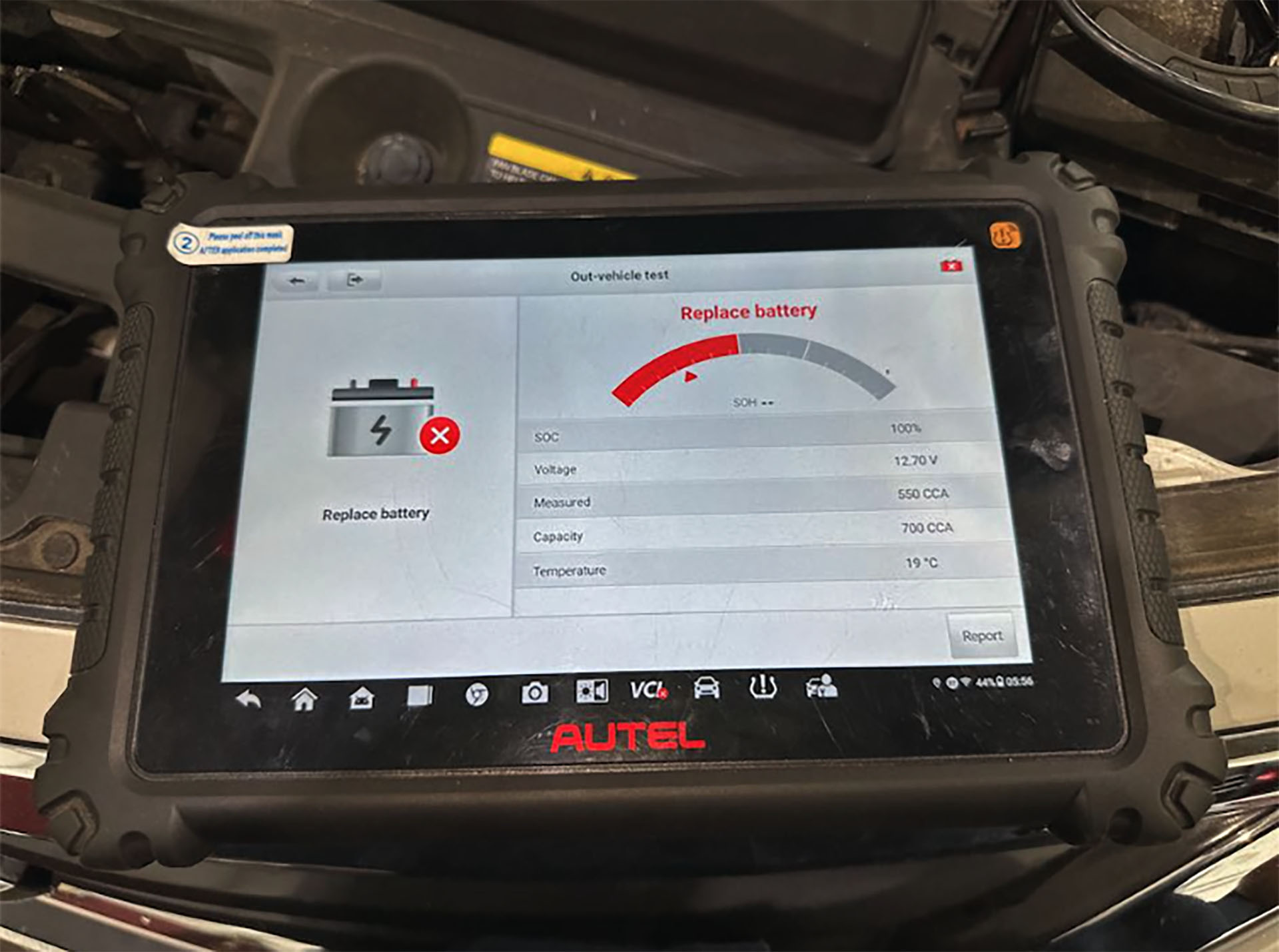
Nissan Altima battery fails battery test.
Nissan Altima battery fails battery test

How long a car battery lasts

How can you tell how well your car battery is doing? Battery power is rated with what’s called cold cranking amps (CCA). 

CCA refers to how long a battery can supply a certain number of amps at 0 degrees, for 30 seconds, while maintaining at least 7.2 volts. The bigger the vehicle, the more amps are needed due to the engine size and power needed to start it.

Through day-to-day use, a battery’s capacity gradually decreases. 

A good battery should last around 5 years. The can depend on different factors, including where the vehicle is driven. If you live in hotter or colder climates, that may shorten the lifespan. 

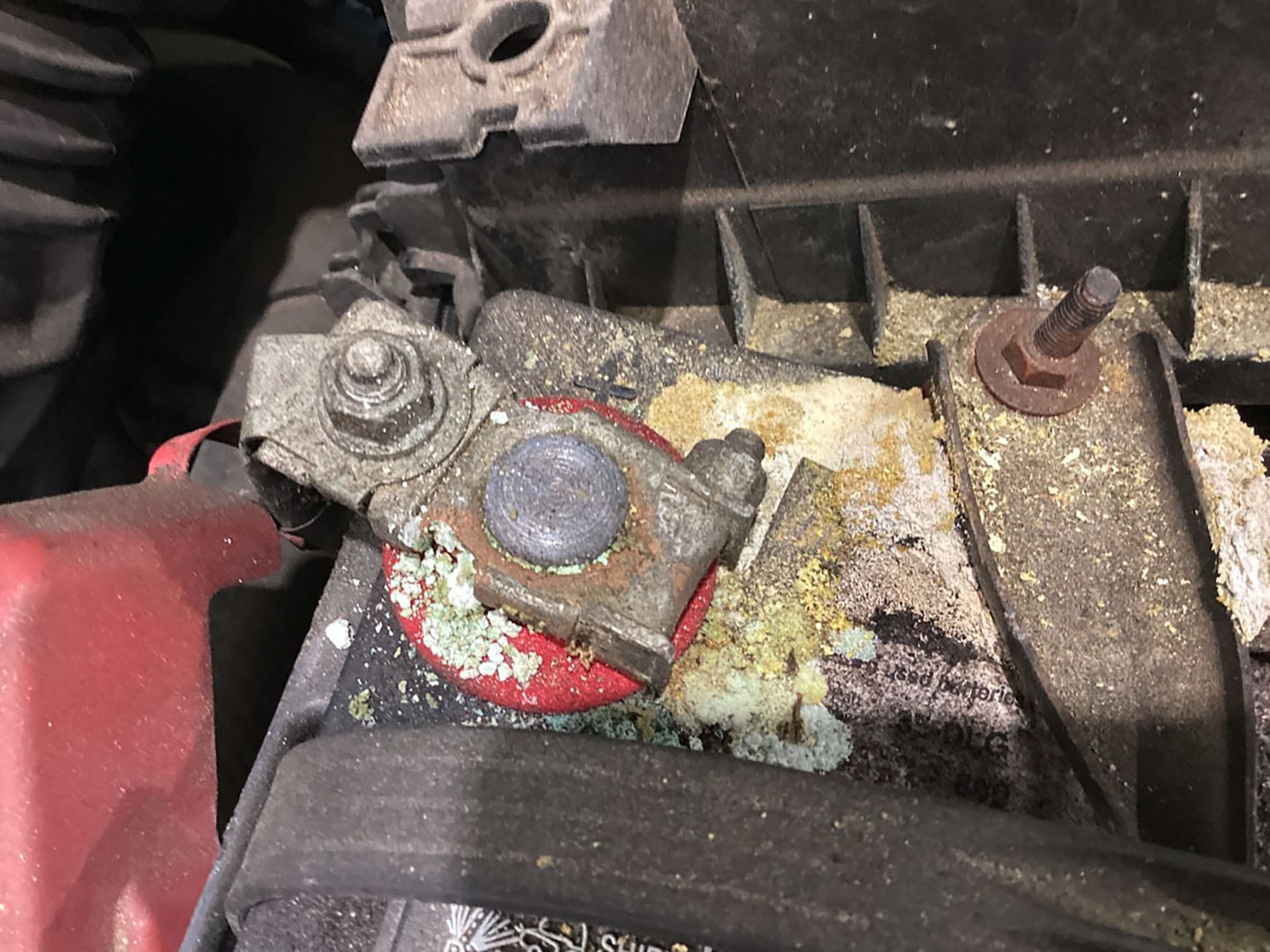
It may also be impacted by corrosion buildup, the quality of the terminals, and whether a good battery hold down is in place.

Corrosion buildup on a Toyota Corolla battery.
Corrosion buildup on a Toyota Corolla battery

What to keep in mind when buying batteries

If your car is due for a new battery, you’re likely wondering what your best options are. 

It’s important to note that while a few companies make a majority of car batteries in the market, not all batteries and battery brands are the same. There will be slight variations in the thickness of the lead plates, the CCA capacity, and warranties.

HomeTowne Auto Repair and Tire is an authorized dealer of Interstate Batteries. Factory batteries usually last 3 or 4 years, while these are rated for 5 years. The warranty also follows the battery.

Another reason why we like using Interstate Batteries is because they secure their batteries so they aren’t sliding around. Batteries that are put in the back of a pickup truck or in a parts car could get jostled around and the plates may crack and break, creating bad cells.

As a rule, you can expect to get what you pay for when it comes to battery replacement. If a battery is super cheap, it’s for a reason. 

When going to a store, unless you know what brands are better it’s going to boil down to group size and CCA.

For example, if you have a Mercedes that requires 750 CCA, it’s because it has more things to turn on. A battery that is of the same group size but only has 500 CCA isn’t going to last.

HomeTowne Auto Repair & Tire is an authorized Michelin and BFGoodrich tire dealer located near Dumfries, Virginia. Automotive repair services are performed on all makes and models, including oil changes, brakes, alignments, inspections, and computer engine diagnostics.

View Post

What is a tie rod? What does it do in my vehicle?

In Auto Parts, Vehicle Maintenance by HomeTowne Auto Repair & Tire

Updated December 26, 2024

A car’s steering system contains many parts that require their own form of maintenance.

Tie rods are one of the components you may have heard a technician or service advisor mention. This item might have worn out or broken from daily use and needed to be replaced.

Unless you work in the automotive field or know someone who does, you might not be sure what a tie rod end is and its purpose.

Well, a tie rod is a part of the steering mechanism inside of your vehicle. It’s the piece that connects the steering linkage – or rack and pinion – to the steering knuckle. This combination is what pushes or pulls the wheel to the right or left when you’re steering.

Inner tie rod, center link, and outer tie rod on a Jeep.
Inner tie rod, center link, and outer tie rod on a Jeep

You’ve got two kinds of setups – rack and pinion and steering box. The gearbox is one solid unit and it has drag links or center links that reach all the way across the chassis and back. 

Meanwhile, the rack and pinion is a long tube that has a pinion inside of it. When you turn your steering wheel, the steering shaft that goes from the steering wheel to the rack turns and rotates the pinion back and forth.

There are two types of tie rods – an inner tie rod and an outer tie rod. They have joints that are typically ball and socket. Over time the socket can become worn allowing movement that results in tire wear and unintended movement in steering, which is unsafe.

Signs of a bad tie rod

When tie rods start to go bad, it can cause steering control issues and prevent you from driving smoothly down the road.

Different symptoms can appear when tie rods are going bad.

Bent tie rod end on a rack and pinion.
Bent tie rod end on a rack and pinion

Drivers may notice certain noises, like a clicking when turning. Creaking and popping sounds are possible if the lubrication dries up.

Worn tie rods can throw off your wheel alignment too, causing the tires to wear out prematurely. This could also result in an off center steering wheel or the vehicle pulling to one side. If the toe adjustments are out severely, the car could dance all over the road.

Loss of steering could occur if tie rods fail completely.

How to maintain tie rods

If you’re worried about your tie rods, have your autoshop check them out. Inspecting tie rod ends is something our technicians already do as part of our preventative maintenance check during an oil change.

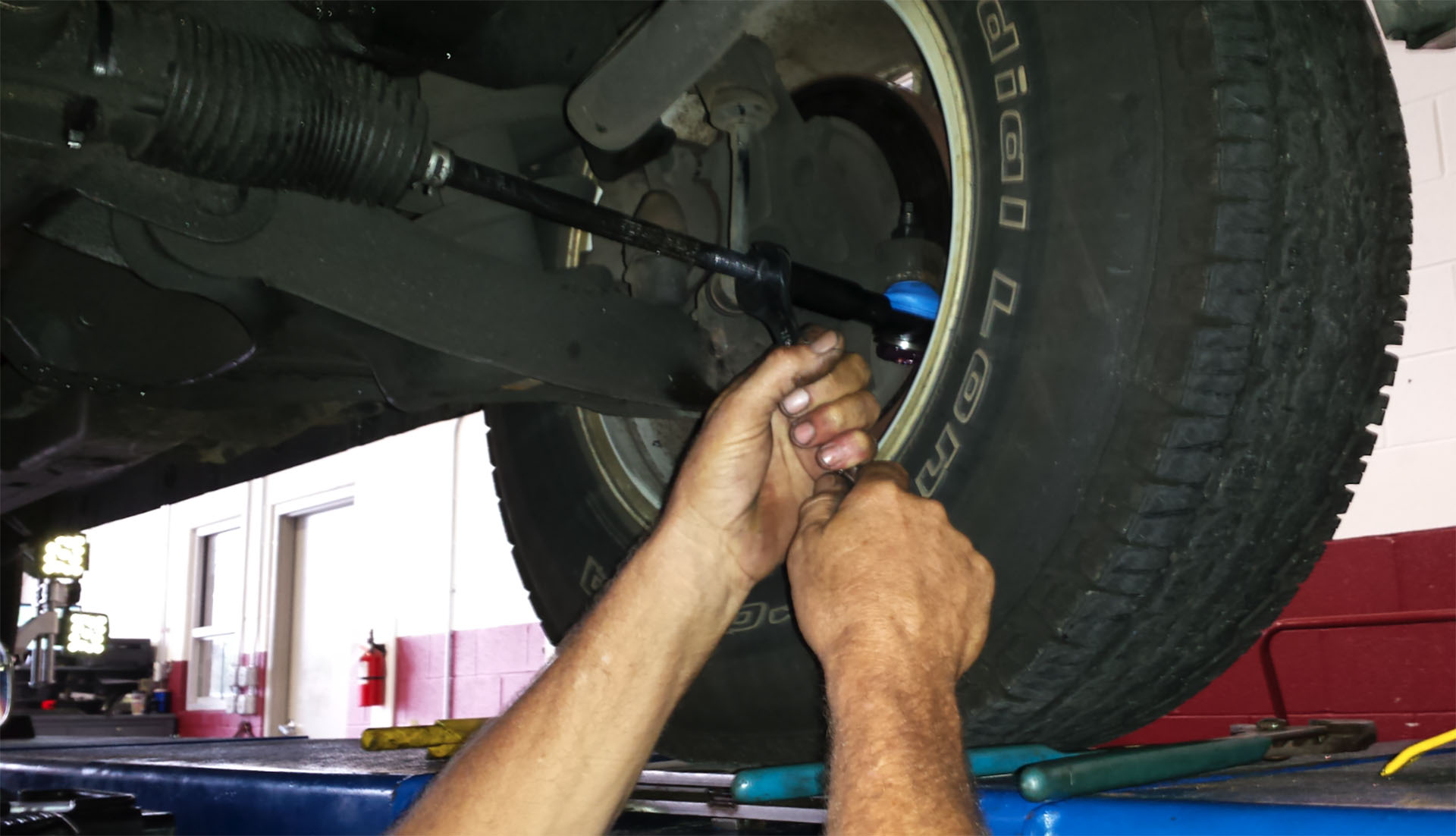
Tie rod adjustment during a wheel alignment.
Tie rod adjustment during a wheel alignment

We also look over steering and suspension parts when performing a Virginia State Inspection.

If an automotive expert you trust recommends replacing tie rods or another component, don’t wait too long to have a new one installed.

You will also want to make sure the tie rod ends remain lubricated. Back in the day, tie rod ends used to have zerk fittings that would be greased regularly. Newer vehicles come with unserviceable zerk fittings. When they have reached the end of their lifespan, we replace them with serviceable zerk fittings.

By equipping your vehicle with high quality tie rods and taking care of them, you can ensure that your travels remain smooth and safe.

HomeTowne Auto Repair & Tire is an authorized Michelin and BFGoodrich tire dealer located near Dale City, Virginia. Automotive repair services are performed on all makes and models, including oil changes, brakes, alignments, inspections, and computer engine diagnostics.