View Post

What we do during an oil change

In Brakes, Oil Change, Tires & Wheels, Vehicle Fluids, Vehicle Maintenance by HomeTowne Auto Repair & Tire

Oil changes are a form of maintenance that most drivers are familiar with.

This service is necessary for your vehicle to run properly. Oil is needed to lubricate many components and some parts feature oil pressure sensors. 

Regular oil changes, which are suggested every 3,000 to 5,000 miles, prevent engine damage from occurring down the road. You can read more about why they are important in this blog post we wrote.

During this service, the oil and oil filter are replaced. HomeTowne Auto Repair & Tire takes it a few steps further by providing additional services.

What an oil change looks like at HomeTowne Auto Repair

While completing an oil change, we always use seat covers, floor mats, and steering wheel covers to protect the vehicle.

In addition to replacing the oil and oil filter, our technicians perform a courtesy inspection. This includes several safety checks, such as testing the battery. They also examine the air filters and look over the belts and pulleys. 

The fluids are checked, as well. We look at the windshield washer fluid, brake fluid, coolant, power steering fluid, and transmission fluid.

Not all of the fluids have a warning light when they’re low and you may not know until something happens. Being low on oil or coolant might cause an alert. That isn’t the case with power steering fluid and transmission fluid.

Measuring the brake pad depth is another part of the process. To pass the Virginia state inspection, they must be at least 2/32 of an inch. We start suggesting replacing the brakes when they reach 3/32 or 4/32 of an inch, but some manufacturers recommend them sooner.

The tires are also measured and rotated, which helps them last longer.

To confirm there isn’t any play or damage, the steering and suspension are inspected. Parts can become loose or go bad overtime. If they aren’t replaced early on, they could lead to more expensive repairs in the future.

Additionally, our technicians make sure the lights are working properly.

The courtesy check and tire rotations are services provided at no additional charge.

We believe in maintaining your car before it breaks down. If we can catch problems early, then we can potentially save people money.

Digital inspections

Any observations our technicians make while performing an oil change or courtesy inspection are noted in digital inspections.

Through digital inspections, we are able to share photos, videos and information about the health of your vehicle. This includes details about what’s looking good, repairs that need to be made, and services we recommend.

These reports can be sent via text or email, allowing you to receive an update wherever you are.

Is your vehicle due for an oil change? You can schedule one at HomeTowne Auto Repair by calling (703) 594-4646.

HomeTowne Auto Repair & Tire is an authorized Michelin and BFGoodrich tire dealer located in Woodbridge, Virginia. Automotive repair services are performed on all makes and models, including oil changes, brakes, alignments, inspections, and computer engine diagnostics.

View Post

Repairing the braking system on a Ford Escape and Ford F150

In Brakes by HomeTowne Auto Repair & Tire

When it comes to auto repair, it’s important to take those extra steps.

This can be eye opening and help technicians track down the root cause of a problem.

We worked on braking system of two vehicles – a Ford Escape and a Ford F150 – that had the same symptom and resolution.

The driver of one of the vehicles said the brakes were sticking. Meanwhile, the owner of the other felt that they’re vehicle was shifting and braking funny.

During the test drive, we experienced similar situations – when they were shifted into drive they wouldn’t go anywhere, as if the driver’s foot is barely touching the brake.

On the Ford Escape, the front left would nose dive. It felt like the rear on the right side wanted to come out from underneath, because the brake pressure was going to the left front.

The same issue was occurring to the F150 on the other side.

How we addressed the braking system problem

To determine the problem, one of our employees sat in the vehicle and stepped on the brake pedal and we cracked the bleeder on the caliper to check the flow.

For both vehicles, we had little or no flow on the side that was experiencing the issue.

There are a few components involved in the flow – the caliper, the anti-lock braking system (ABS) pump, and the brake hose. The most common issue is with the brake hose.

We removed the caliper and depressed it to confirm it wasn’t bad. When it was off the vehicle, the caliper worked fine. However, attached, it was as hard as concrete and wouldn’t let anything through.

The brake hose on the vehicles were replaced, and the vehicles are driving fine.

One of the employees took the extra step and cut the brake line into pieces and dissected it. Through this process, he learned that the crip fitting was swollen and closed up.

Overtime, the brake hose gets a little bit hotter when pieces of metal are around it and slowly deteriorates.

A lot of people would have noticed the caliper wasn’t working and just sold calipers without isolating the problem. We did recommend calipers because the amount of heat can shorten their lifespan. 

We leave the choice in the hands of our customers. Our goal is to provide as much information to help them make an educated decision.

Can you prevent this problem?

You can’t do anything to prevent this problem, it’s just the way the vehicle is designed. You need to have the metal brackets to hold the hose in place. With that amount of hydraulic pressure, the hose would move back and forth and rupture.

You can maintain your braking system through brake fluid exchanges. This service can always help, but some of these things are inevitable.

We recommend brake fluid exchanges every 30,000 miles. You can learn about why you should have the fluid replaced by reading this article we wrote.

The same car problem can come across differently to drivers. If your vehicle sounds or is acting strange, make sure to provide as much information to the mechanic or repair shop as possible. Those little details can help narrow down the search.

HomeTowne Auto Repair & Tire is an authorized Michelin and BFGoodrich tire dealer located in Woodbridge, Virginia. Automotive repair services are performed on all makes and models, including oil changes, brakes, alignments, inspections, and computer engine diagnostics.

View Post

Does my car need new brakes?

In Brakes by HomeTowne Auto Repair & Tire

Typically, drivers don’t know that their car needs new brakes until they bring it to a repair shop for an oil change or to address a problem.

While performing an oil change, our technicians do a tire rotation and look over the vehicle. During this courtesy inspection, we may find that it requires new brakes or they are reaching the end of their lifespan.

To pass the annual state inspection, brakes must be a least 2/32 of an inch. However, we suggest replacing them when they get to 3/32 or 4/32 of an inch, depending on the vehicle and driving conditions.

Read more about brakes and the Virginia safety inspection.

When you go in for your next oil change, it’s a good time to have all four of your brakes checked.

Signs that new brakes, brake repair are needed

Overtime, you may start to notice certain signs, such as squealing and the vehicle taking longer to stop.

If you put off replacing brakes, it will likely lead to further damage down the road.

How often brakes need to be replaced depends on many factors, including the make and model. Driving behaviors, how much someone drives, and stop and go traffic also play a role.

Generally, brakes can last anywhere from 36,000 to 80,000 miles. We have replaced them at 18,000 miles, which was extremely low. 

It’s important to make sure the types of brakes put on your car are of good quality and meet Original Equipment (OE) specifications, because the way the vehicle safety system works they are programmed to operate with certain types of parts. 

If you put inferior parts on, the systems like Advanced driver-assistance systems (ADAS), Traction Control System (TCS), Anti-lock Braking System (ABS) may not perform correctly.

Sometimes, brake repair is needed between brake jobs.

These are some symptoms that a vehicle is in need of brake repair.

Brake services we offer

HomeTowne Auto Repair & Tire offers an array of brake services.

Our technicians can replace various components. These include: the master cylinder, vacuum or hydraulic boosters, brake lines, calipers or wheel cylinders, brake pads and rotors, and brake drums and shoes. 

We are also able to replace the entire parking brake system, whether it’s electric or not. The parking brake is made up of the handle or pedal, and linkage from the handle or pedal to the rear caliper or shoe. 

Brake fluid exchanges are performed at HomeTowne Auto Repair, as well. 

Recommended every 30,000 miles, this service prevents corrosion from building up on the inside of the calipers.

If your Anti-Lock Brake System (ABS) warning light comes on, we can look into that too.

The brake system is made up of many parts, and it’s important to keep up with it. If you notice something out of the ordinary, it won’t hurt to call a local repair shop and ask them about it.

HomeTowne Auto Repair & Tire is an authorized Michelin and BFGoodrich tire dealer located in Woodbridge, Virginia. Automotive repair services are performed on all makes and models, including oil changes, brakes, alignments, inspections, and computer engine diagnostics.

View Post

Why is a brake fluid exchange important?

In Brake Fluid Flush, Brakes by HomeTowne Auto Repair & Tire

Car maintenance isn’t just about oil changes and wheel alignments. It also extends to your brake system.

When you step on the brake, the brake pad and brake rotor press against each other, creating heat and moisture. They don’t move very far, and neither does the brake fluid between them. 

The moisture that accumulates causes corrosion to build up. Corrosion can destroy a brake system from the inside out.

We recommend brake fluid exchanges every 30,000 miles. Because this typically coincides with brakes, which should be replaced every 40,000 to 50,000 miles, it’s a good idea to have both services done at the same time.

Why you should get a brake fluid exchange

Regular brake fluid exchanges prolongs the life of anti-lock braking systems (ABS), which prevents the brakes from locking up during emergencies, allowing you to maintain steering control.

This maintenance option also ensures that your brake pedal is firm.

If you wait too long for a brake fluid exchange, corrosion can build up on the inside of the calipers, which may result in the calipers dragging. Internal seals will deteriorate and prevent the calipers from pushing in and out correctly.

Another consequence is that the inside of the soft brake hoses will break down, restricting brake fluid flow.

The bleeders, which enable mechanics to perform a brake fluid exchange and release air, can also rust shut if they aren’t moved every once in a while.

Signs that you need a brake fluid flush

It can be hard to know if you need a brake fluid flush, but there are some indicators. A low brake pedal is one of them. Another sign is a soft brake pedal, which can be caused by moisture in the system that’s starting to boil.

You also need to look into testing the brake fluid for contaminants and moisture. Just because the brake fluid looks dark – rather than clear – doesn’t necessarily mean it’s bad. 

However, if the fluid is very dark and you can see particles floating in it, that’s the rubber material from the master cylinder or ABS that’s starting to come apart and mix with the brake fluid. That’s a good indicator that you need to change it.

Test strips and true boiling point measure for moisture are ways you can determine if you need a brake fluid flush. 

For most cars, every 30,000 miles is a good time to have this service performed. How often you have it done also depends on the manufacturer. If you are at 50,000 or 55,000 miles when you go in for your first brake job and a brake fluid exchange hasn’t been performed yet, you definitely need to do it.  

A lot of cars have computerized brake systems, such as ABS and traction control, where the manufacturer is starting to recommend brake fluid exchanges every 18 to 24 months to ensure the brake system is working correctly. So, you need to check your owner’s manual.

Brake fluid exchange being performed.
Brake Fluid Exchange

What happens during brake fluid exchanges

During a brake fluid exchange, our technicians connect a pressurized machine to the master cylinder. After adding new brake fluid to the machine and setting it to the appropriate pressure, they go to each wheel and remove the old brake fluid.

We use BG DOT 4 Brake Fluid, which aims to combat moisture, prevent rust and provides protection to the brake system. 

If you are considering a brake fluid exchange, it’s also important to make sure your vehicle doesn’t have electric brakes, which don’t require it.

How well a vehicle runs and lasts is determined, in part, by its maintenance. By staying up to date on braking fluid exchanges and other services, you can get the most out of your car.

You can learn more about brake fluid exchanges by checking out this video:

HomeTowne Auto Repair & Tire is an authorized Michelin and BFGoodrich tire dealer located in Woodbridge, Virginia. Automotive repair services are performed on all makes and models, including oil changes, brakes, alignments, inspections, and computer engine diagnostics.

View Post

Brake failure symptoms and causes

In Brakes by HomeTowne Auto Repair & Tire

Many factors can lead to brake failure – cheap brakes, brake parts installed incorrectly, and brake wear are among them. 

Several symptoms indicate that brake repair is needed.

Indicators of brake failure

Grinding, squealing, rattling and groaning noises are all signs that there is a problem with your car’s brake pads.

The causes range from loose parts to a lack of lubrication, depending on the sound.

You should be watchful for excessive brake dust on the wheels. Brake dust can be a normal wear condition – as brakes wear down, they produce dust. But if you see a lot of brake dust on one or more wheels, that could be an indicator that your brakes may be getting low. If you have an excessive amount of brake dust on one wheel, you could have a brake caliper issue.

Cheap brake rotors and significant wear of pads and rotors could cause problems, as well.

If you’re driving down highway, or hills, or in traffic and you notice the brake pedal is pulsating, or moving back and forth, it’s an indication that your brake rotors have an excessive amount of run out, usually due to significant heat.

This can be the result of age and components becoming worn over time. Cheap brake parts may not have the same tolerances as your O.E. fitment parts and hold up to the heat as well. In addition, they could also give you a pulsating feeling sooner.

Not using high quality brake pads will wear more quickly than high quality ones. Whether their organic or semi-metallic will also determine how quickly they wear out.

TIP: One thing you don’t want to do is drive with two feet, with one resting on the brake pedal. Even resting your foot on the brake pedal will cause a small amount of pressure on the brake pads, causing them to wear faster. The pads putting constant pressure on brake rotors could cause excessive heat and warp your rotors. There are many times we’ve ridden with a customer who was wondering about having brake issues, and they didn’t realize they were driving with two feet. 

A vehicle’s Anti-Lock Brake System (ABS) warning light is another sign that something is wrong.

The Anti-Lock Brake System (ABS) Light on a vehicle.
ABS warning light

The ABS prevents brakes from becoming locked in an emergency. This enables you to keep steering control.

Various issues could prompt this light to turn on. These include a bad hydraulic pump or ABS module, malfunctions with the speed sensor or bulb check, and low brake fluid.

HomeTowne Auto Repair & Tire is an authorized Michelin and BFGoodrich tire dealer located in Woodbridge, Virginia. Automotive repair services are performed on all makes and models, including oil changes, brakes, alignments, inspections, and computer engine diagnostics. 
View Post

Mercedes parts replaced after wheel falls off

In Brakes, Suspension by HomeTowne Auto Repair & Tire

One of our customers was driving down the road when a wheel on their Mercedes fell off.

The impact resulted in damage to the steering knuckle, which connects suspension and steering parts.

Steering knuckle.
Steering Knuckle

It also damaged the hub bearing, which allows the wheels to rotate.

Old and new hub bearing.
Old and New Hub Bearing

One of our technicians changed them and the brake dust shield. These Mercedes parts were replaced last month.

Brake dust shield.
Brake dust shield

This is one reason why it’s important to torque lug nuts correctly.

We hand torque all of our lug nuts when putting wheels back on a vehicle after completing a project, such as a tire rotation or brake repair. 

Our technicians use torque limiters and torque wrenches.

If you don’t torque the lug nuts enough, it will leave the wheel loose and ruin the wheel, the wheel studs, and wheel bearing. 

Overtightening the lug nuts, however, will weaken the threads on the wheel studs, which can cause a failure.

HomeTowne Auto Repair & Tire is an authorized Michelin and BFGoodrich tire dealer located in Woodbridge, Virginia. Automotive repair services are performed on all makes and models, including oil changes, brakes, alignments, inspections, and computer engine diagnostics. 

View Post

Why you shouldn’t use cheap brakes

In Brakes by HomeTowne Auto Repair & Tire

Updated June 11, 2025

The quality of the parts used on a vehicle can play a large role in how it runs. 

Brakes are no exception.

Some drivers may opt for cheap brakes. While this choice may save them a few bucks in the meantime, they could lead to a few problems.

How cheap brakes impact vehicles

We don’t recommend using cheap brakes for a number of reasons. 

First of all, they can promote noise, vibrations, and road symptoms — such as rapid wear. These issues might not seem concerning initially, but you will eventually need to address them. 

The Advanced Driver Assistance Systems (ADAS) is another factor to consider. ADAS is programmed to have a certain amount of braking force and the computers know when the brakes are cold or hot. 

If you replace them with inferior parts, the control systems can be affected in an emergency situation. They may not grab as hard or they could have too much of a fade, impacting the safety of those in the car.

Drivers could see more brake dust, as well. Cheap brakes are going to throw brake dust all over the wheels – so much so that it can turn a silver wheel black.

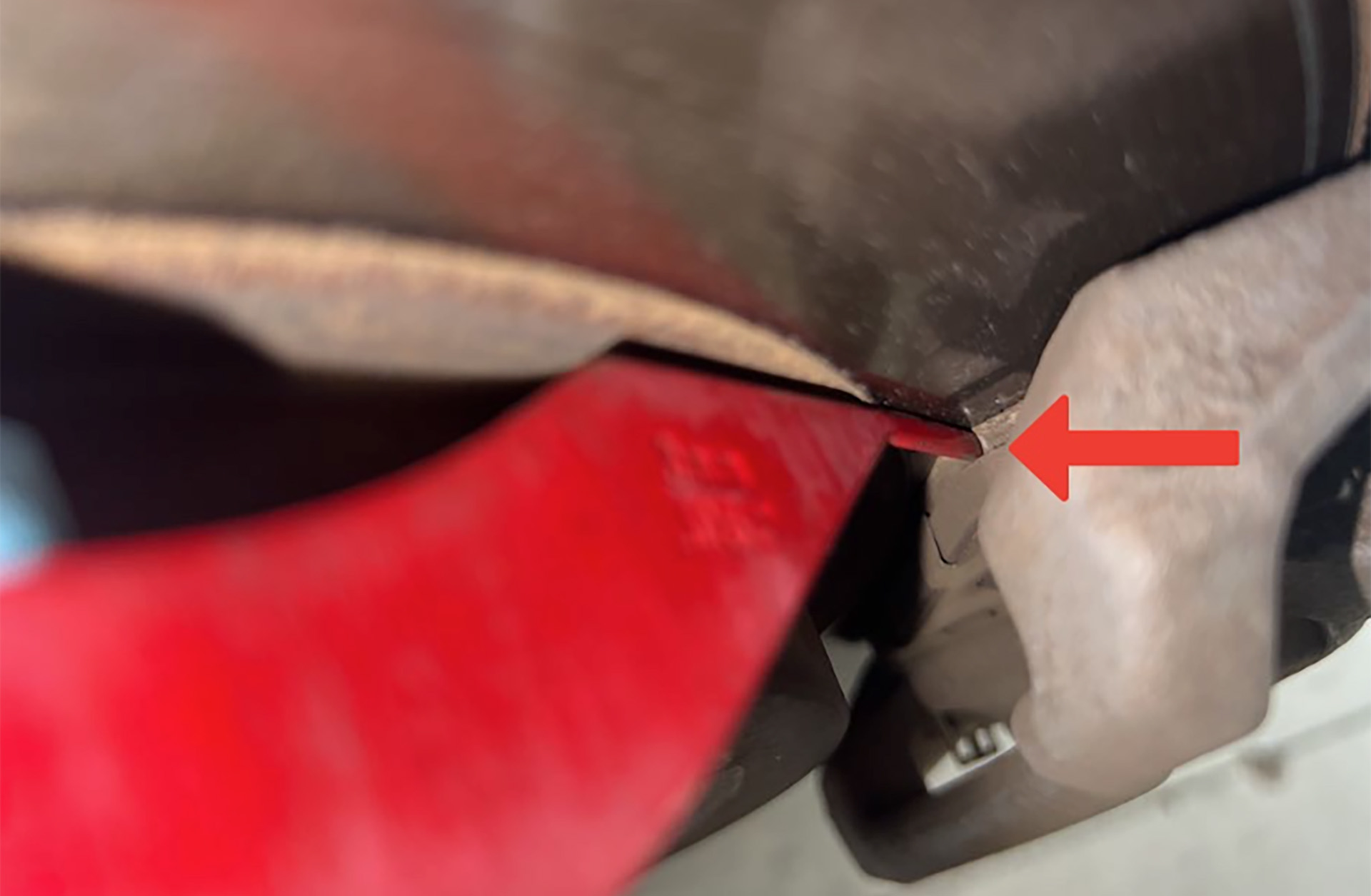
Brake measurement on a Kia Telluride.
Brake measurement on a Kia Telluride

After the warranty is up, high quality brakes tend to last much longer and come with fewer symptoms than cheaper ones.

You may not see a difference between the two when you pull out of the auto shop parking lot. What you will notice is the value retention on the more expensive brakes is going to hold its weight.

Brake wear indicators

Brakes are one of the parts checked during the Virginia State Inspection. The minimum Virginia State Safety recommendations is no less than 2/32 of an inch. 

Depending on the make and model of the vehicle and your driving conditions, it’s a good idea to start changing your brakes around 3/32 of an inch to 4/32 of an inch. For some vehicles, the manufacturer’s recommendation could be higher.

Brake rotors should be changed with a brake job because most of the rotors on today’s vehicles wear down. Rotors need to be able to dissipate heat so you don’t get a pulsation or vibration type feeling in the steering wheel and brake pedal. That pulsation symptom can impact the ADAS system. 

Some indications you may need a brake job are grinding noises and brake pedal pulsation. You may also notice a low pedal or a high end squeak noises, which could be the pad low indicator rubbing on the brake rotor.

Keep in mind, if it has rained or been humid recently, you may notice squeaking when you first start braking early in the morning. If it goes away after you’ve pressed on the brake a couple times, it’s most likely a little bit of rust built up due to the humidity or the brake rotors being wet. 

At HomeTowne Auto Repair & Tire, part of our inspection process during our oil change is to do a visual inspection of the brakes to see if they’re getting low or if we notice any other problems. 

Burnt brake pads and rotors on a GMC Sierra.
Burnt brake pads and rotors on a GMC Sierra

We look into any warning lights and performance problems, as well. The brakes on a GMC Sierra were locking up and glowing red. One of our technicians learned that the brake pads and rotors were burnt.

Many of the vehicles today have electronically controlled components, such as steering and brake callipers, that can hide some of the normal symptoms you would notice in older cars.

HomeTowne Auto Repair & Tire is an authorized Michelin and BFGoodrich tire dealer located in Woodbridge, Virginia. Automotive repair services are performed on all makes and models, including oil changes, brakes, alignments, inspections, and computer engine diagnostics.
View Post

Brake service: When and why to have it done

In Brakes by HomeTowne Auto Repair & Tire

Written by Sydney Jones, General Service Technician for HomeTowne Auto Repair & Tire

The most crucial safety device in your car is the brakes. 

As Newton’s first law of motion tells us, an object in motion will stay in motion until stopped by an external force such as friction. We can’t rely on friction to stop our cars while going 70 miles per hour on the highway, so we have brakes to stop our wheels from turning. 

It’s not as simple as “hit the pedal, stop the car,” though. Laws of physics and elements of chemistry come into play, as well. 

How brakes work

You hit the brake pedal with your foot, yes. This action then sets off a chain of reactions. When you push down the brake pedal, you tell the master cylinder to apply pressure to the brake fluid running through the brake lines underneath your car. 

You have four brake lines, each one going to one of your four wheels. The pressurized brake fluid causes the calipers to press inward on the brake pads, which provide a much greater level of friction than the road and stop your car much faster.

Overtime, the fluid running through your brake lines will get old and obtain air bubbles, and condensated water is created when liquid is on the brake pads. More liquid in the system causes the brake fluid boiling point to decrease whereas it is normally very high to withstand the heat produced from braking. 

The lower boiling point will allow for metal pieces to begin to deteriorate. Since the brake lines are made of copper, they leave copper residue in the fluid, resulting in lower braking power and eventually the costly replacement of calipers and brake lines.

About the BG Brake Service

To combat this you should have your brake fluid serviced every 30,000 miles. The BG Brake Service is done by taking contaminated fluid out of the master cylinder, pressurizing it, and adding DOT 3 or DOT 4 Ultra Drive Flushing Formula Brake Fluid — depending on the needs of your car — into the master cylinder until only new fluid is coming out of the lines at each wheel. 

This removes air and condensated liquid, leaving only your incompressible brake fluid and giving you maximum braking power. 

It is important to get this service done every 30,000 miles in order to be covered under the BG Lifetime Protection Plan, which will protect your Master Cylinder, Brake Lines, and Calipers up to $4,000 should they ever fail. 

You can have brake service performed at any BG Certified shop, such as Hometowne Auto Repair & Tire.

HomeTowne Auto Repair & Tire is an authorized Michelin and BFGoodrich tire dealer located in Woodbridge, Virginia. Automotive repair services are performed on all makes and models, including oil changes, brakes, alignments, inspections, and computer engine diagnostics. 
View Post

Brakes and the Virginia Safety Inspection

In Brakes by HomeTowne Auto Repair & Tire

Bringing your vehicle in for the Virginia safety inspection is one way you can protect yourself and others.

The brakes of your vehicle have to be working properly in order to pass the yearly requirement.

Problems with brakes

There can’t be a soft brake pedal.

A hard brake pedal or a vehicle having a hard time stopping can be caught during the state inspection, as well.

This can be caused by a problem with the vacuum. Many vehicles now have electric pressure pumps, rather than old components, such as the vacuum brake booster.

Twisted brake hoses is another problem we keep an eye out for.

Brake hoses can become twisted for various reasons. Perhaps someone who was putting a caliper back on turned it one too many times.

The inspectors ensure that nothing is rubbing on or starting to wear through the brake hoses and they haven’t begun to develop excessive cracks.

A vehicle will fail if any active leaks or oil contamination is found.

Other parts we check

Brake pads must be at or above 2/32 inches.

We may start recommending new brakes at 3/32 or 4/32 of an inch, but they have to be under 2/32 to fail inspection. At 2/32 of an inch, brakes will technically pass, but they might not within a week or a month, depending on your driving conditions.

Rotors need a certain thickness that’s based on a manufacturer’s recommendations. 

Excessive rust on the rotors is another symptom we look for.

You could have a caliper that is seized, or maybe a piston is pushing in but a caliper isn’t sliding. This means one pad isn’t making contact with the rotor and the wheel only has half of its braking ability. When we see a lot of rust built up on the rotor, it’s a good indication that the brakes aren’t working correctly.

Vehicle safety inspectors are also checking to make sure the parking brake is able to hold on a slight incline.

Some of the vehicles driven today use an electronic parking brake. They don’t even have a handle that you pull up; instead, it’s run by a computer.

There are different ways that the electronic parking brake needs to be tested during the state inspection.

The anti-lock braking system (ABS) light is another component that’s checked. A vehicle can still pass inspection, even if the yellow ABS light is on. However, it will not pass if the red brake light is on, because that could indicate a problem with the parking brake system or fluid.

If it feels like there is a mechanical issue, inspectors can take the car for a test drive.

HomeTowne Auto Repair & Tire is an authorized Michelin and BFGoodrich tire dealer located in Woodbridge, Virginia. Automotive repair services are performed on all makes and models, including oil changes, brakes, alignments, inspections, and computer engine diagnostics.

View Post

Is my disc brake caliper seizing up?

In Brakes by HomeTowne Auto Repair & Tire

Updated June 8, 2026

Does it feel like your vehicle is having trouble accelerating?

The symptom could be tied to a few issues. 

Sometimes, acceleration problems are linked to the braking system. A disc brake caliper seizing up could be the culprit.

What is the caliper in a disc brake?

The caliper sits on the brake rotor and is attached to the steering knuckle. When you press the brake pedal, fluid goes into it and pushes the pistons against the brake pads and the brake pads against the rotor.

What disc brake caliper problems can occur?

Disc brake calipers can get overheated. Brake fluid is very corrosive, so they can break down from the inside out. 

Piston boots can rip and tear and get overheated from high and low spots from the rotor, bad brake pads, or they can get too much moisture inside of them from the brake fluid itself.

A disc brake caliper seizing up is another problem drivers may face.

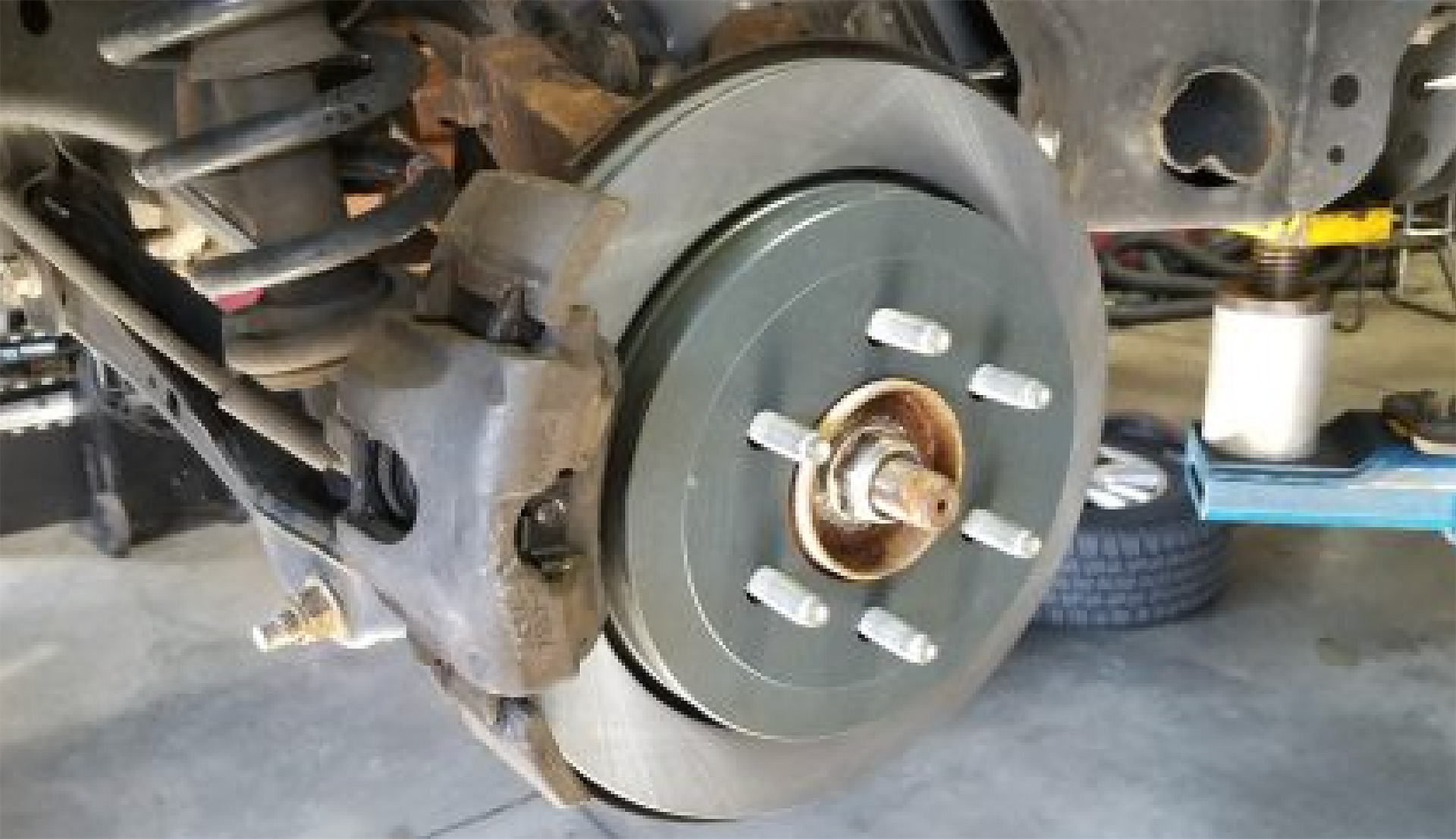
Ford Expedition rear brake and suspension.
Ford Expedition rear brake and suspension

What can cause a disc brake caliper to seize up?

A disc brake caliper seizing up is caused by various factors, including dirt, lack of maintenance and rust. 

Rust that builds up over time can prevent the brake caliper piston from resending back into the disc brake caliper. It will keep holding constant pressure on the brake pad that pushes against the disc brake rotor, producing heat.

When piston boots rip, it allows air, moisture and dirt to get in. That can lead to a disc brake caliper seizing up or dragging.

There are also brake fluid-related problems.

Issues can stem from the brake fluid moisture content and the brake hoses. If the brake hoses leading to the calipers collapse from the inside, sometimes it will restrict how much brake fluid flows out.

In extreme circumstances, the brake fluid can boil and cause a very low brake pedal. This is one of the reasons why you want to change the brake fluid when automotive technicians are working on your brakes.

What are signs of a disc brake caliper seizing up?

Drivers may notice these symptoms when a disc brake caliper is seizing up:

  • Lack of acceleration
  • Burning smell
  • Smoke or steam coming from wheels

On rare occasions, you might notice a soft brake pedal.

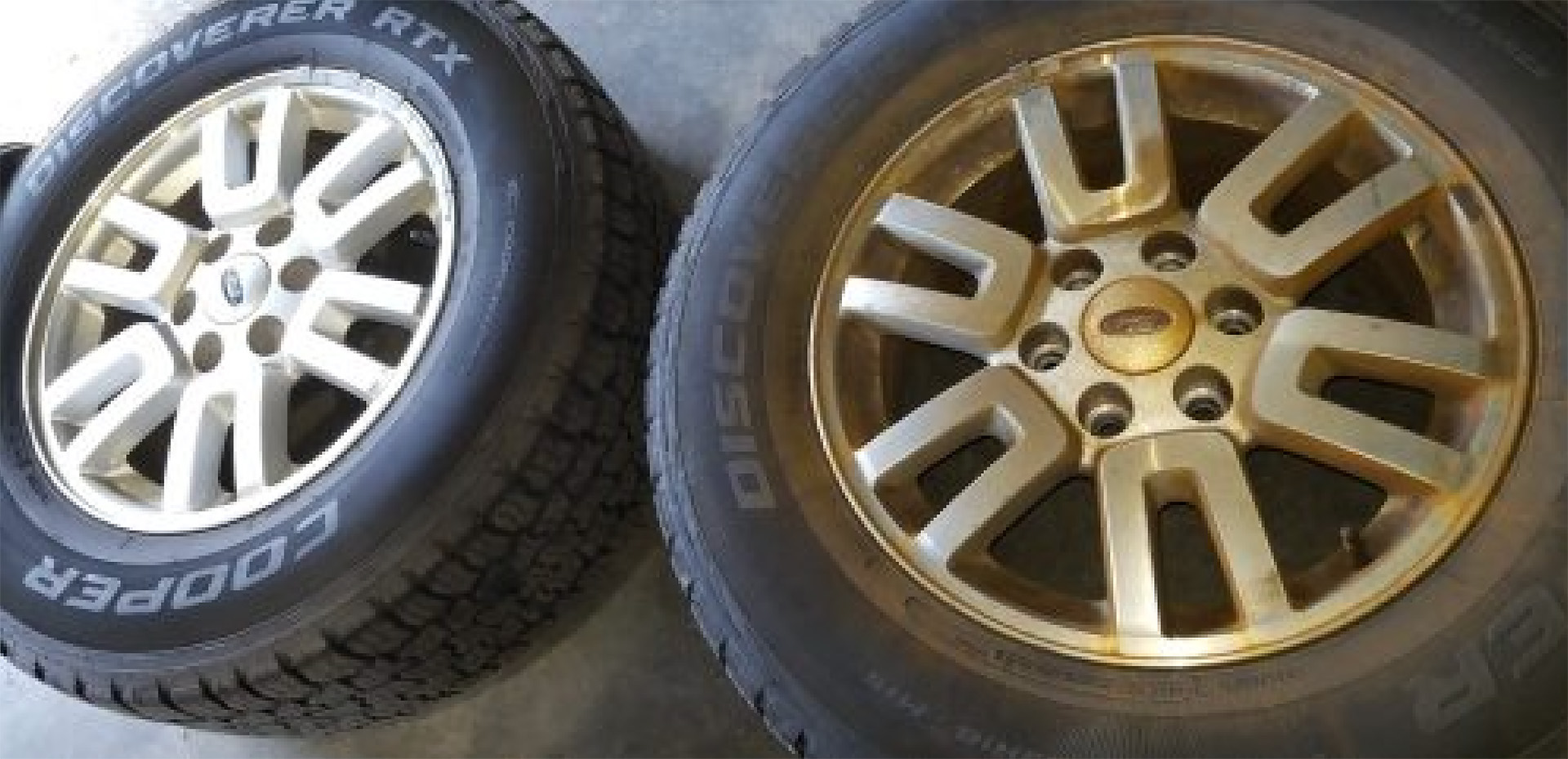
Ford Expedition front wheel discolored from brake caliper seizing up.
Ford Expedition front wheel discolored from becoming brake caliper seizing up.

When do I replace a disc brake caliper?

It’s hard to say how long a disc brake caliper will last. We have seen them fail at 70,000 miles and make it to 250,000 miles. For maintenance, we recommend new disc brake calipers at 150,000 miles. 

When an automotive technician is performing a brake check, they can determine whether you need to replace the brake caliper. You don’t need to have new calipers installed every time, but may want to consider changing them if the vehicle has a lot of age or miles on it.

If you’re having a problem with one brake caliper, you can swap out that one. However, it’s a good idea to replace both on the front or the rear, because if one goes bad — even though the other one is functioning — it’s not a guarantee that it won’t go bad in the near future.

Another way that the automotive technician services the brakes is by lubricating the metal contact points of the disc brake caliper and pads.

HomeTowne Auto Repair & Tire is an authorized Michelin and BFGoodrich tire dealer located in Woodbridge, Virginia. Automotive repair services are performed on all makes and models, including oil changes, brakes, alignments, inspections, and computer engine diagnostics.