View Post

Gear shifter problems: why is my vehicle stuck in park?

In Automotive Diagnostics by HomeTowne Auto Repair & Tire

When getting ready to drive your car you may have found that it struggles or refuses to move out of park.

Gear shifter problems like this can be frustrating and even alarming, especially if you have somewhere to be or it forces you to rely on a tow truck.

What causes gear shifter problems?

So, what can keep a car from shifting out of park? Here are several possible causes:

  • Ignition switch going bad
  • Sticking shift interlock solenoid
  • Brake light switch issues
  • Parking pawl
  • Open circuit on interlock solenoid
Toyota Prius push to start.
Toyota Prius push to start

Ignition switch going bad: To get the car out of park, a couple of things need to be achieved. Most vehicles have to be in the “on” or “accessory” positions, or they must be started. If your ignition switch isn’t sending that signal, it’s not going to let that interlock release.

Open circuit on interlock solenoid: The interlock solenoid having an open circuit is also a possible reason why a shifter remains in park.

Brake light switch issues: There may be a problem with the brake light switch. If this component is malfunctioning, it can impact the gear shifter. That’s because the vehicle has trouble understanding when you press on the brake pedal. 

Parking pawl: This is a tooth or pin that stops the transmission from moving, causing it to park.

Sticking shift interlock solenoid: If you’re finding it difficult to move the shifter from park, it could have something to do with the shift interlock solenoid. When it becomes stuck, you may not be able to change gears. If the solenoid is at fault, the gear shift assembly might need to be replaced.

Diagnosing shifting issues

In most cases when a gear shifter won’t come out of park, step one of the diagnostic process involves getting underneath the vehicle to see where the shift lever is. Our technicians might need to manually shift it into neutral to push it into the bay.

Then, we would need to go down the interlock tree. Older technicians are going to eliminate electricity from mechanical with the bypass. If they can use the bypass, that means the transmission will manually shift. 

Then, they can see if something is wrong with the shifter or the interlock system. Each component, including the brake switch and ignition switch, are tested separately. A lot of times, to really check the interlock system you need to remove the middle console.

This procedure can change depending on whether it’s a car, truck or four-wheel drive vehicle. That matters because of where everything is located. 

If we’re working on a vehicle where the technicians aren’t able to get underneath or reach down to shift it, the car may need to be towed into the bay. 

Gear shifter maintenance

Gear shifter problems can occur without warning.

While some issues can’t be completely avoided, basic maintenance could help. This includes keeping the shifter clean. Try not to spill soda or coffee in this area, and make sure to wipe it down every once in a while.

How you shift may also have an impact. If you slam it into gear or are being reckless, it’s going to wear it out prematurely.

If you notice the shifter has trouble coming out of park once or twice, go ahead and reach out to an automotive expert.

Sometimes, a part just breaks and it can be night and day from time to time. In most cases, however, gear shifter problems happen gradually.

HomeTowne Auto Repair & Tire is an authorized Michelin and BFGoodrich tire dealer located near Lake Ridge, Virginia. Automotive repair services are performed on all makes and models, including oil changes, brakes, alignments, inspections, and computer engine diagnostics.
View Post

Sources and symptoms of air conditioning leaks

In Automotive Diagnostics by HomeTowne Auto Repair & Tire

The heat and humidity of summer is laying heavy in Northern Virginia. To combat it, many drivers are relying on their air conditioning.

If your car’s a/c system isn’t keeping up with the high temperatures, a bad part or leak could be at fault.

A/c leak causes

Air conditioning leaks can occur throughout the a/c system. Anything that holds refrigerant is subject to leaking.

Sometimes, leaks are easier to spot. Other times, however, they can be hidden.

Possible leak sources include:

  • Rubber gaskets
  • Air conditioning condenser
  • Evaporator core
  • Accumulator
  • Fittings
  • Rubber lines
  • A/c compressor
  • Expansion valves
  • Air conditioning hoses

Rubber gaskets: Gaskets eventually become fragile from daily use and are more susceptible to leaking.

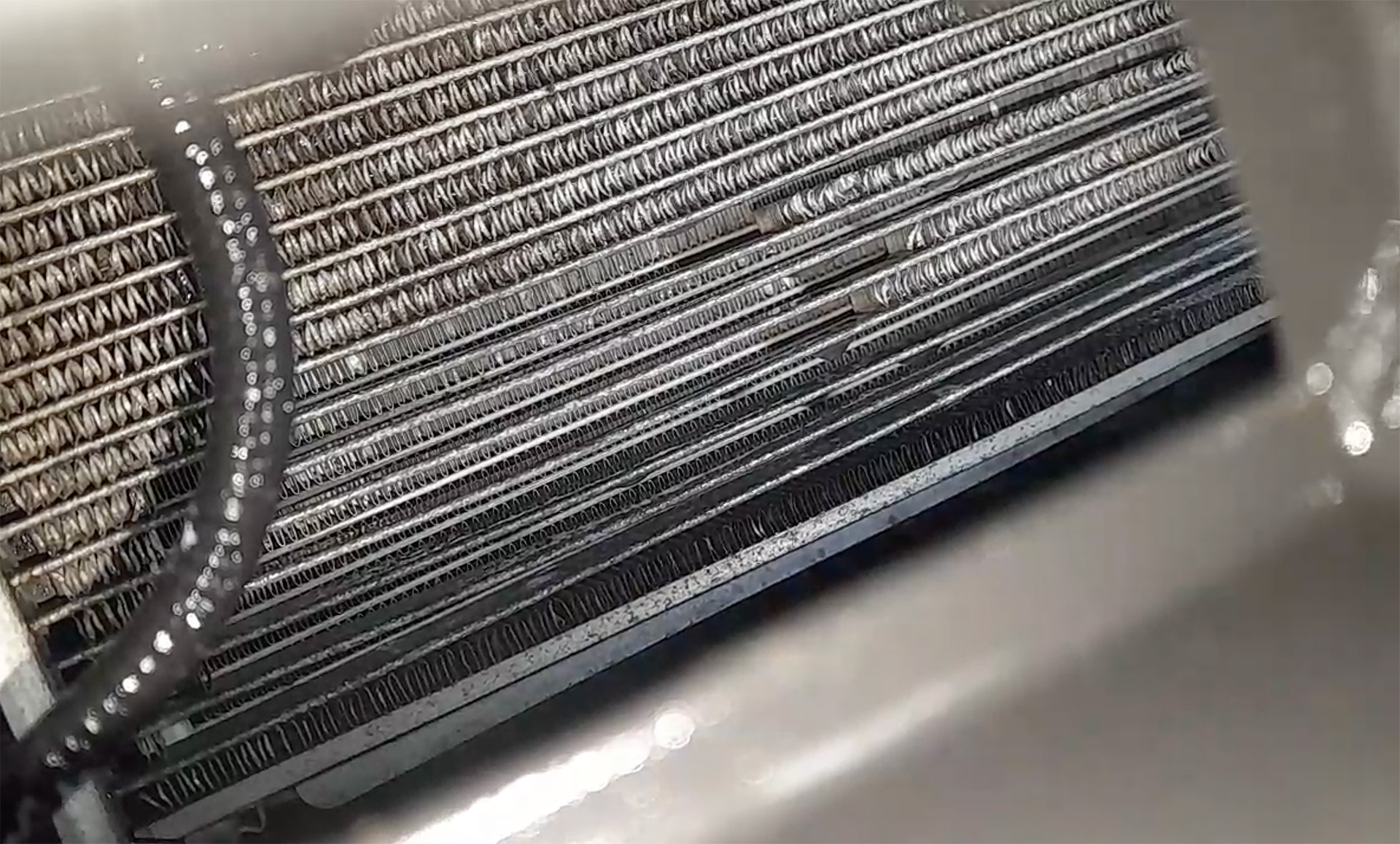
Kia Rio air conditioning condenser leaking.
Kia Rio air conditioning condenser leaking

A/c condenser: Depending on the type of metal the condenser is made out of, corrosion could cause them to fail. Pinhole leaks may form from the outside or inside. Outside sources, such as weather and salt, can lead to corrosion. Problems might also stem from the type of freon and the reaction to the metal on the inside. Because the metal is much thinner, a leaking condenser can also be the result of impacts. 

Evaporator core: We worked on a Mitsubishi Outlander where ultraviolet dye was seen coming out of the evaporator drain tube. This indicated that the evaporator core was leaking.

Rubber lines and fittings: Leaks are possible on the fittings and rubber lines, which experience drastic changes in temperature.

Air conditioning hoses: An a/c leak may develop on the hose that connects the condenser and compressor. The seals connected to the condenser can go bad.

Leak indicators

Drivers may be clued in that their vehicle has an a/c leak if the air conditioning system isn’t working correctly. Low freon is one of several common causes behind a/c problems.

If an air conditioning system has been serviced correctly and tracer oil (or ultraviolet dye) was added, it will glow green. Drivers may see the dye if a leak is bad enough. For smaller leaks, special glasses or a blacklight are needed.

Smoke may be seen if the leak is fast enough. When refrigerant leaves the system, it turns into a gas because it goes from super high pressure to very low pressure.

The engine bay serves as a container. So, if it fills up with smoke, drivers may see it being released from underneath the hood. The smoke could be coming from the condenser, evaporator core, or another source. You just don’t know where until the smoke settles.

How we find air conditioning leaks

Do you or your auto repair shop think your car has an air conditioning leak? The process of finding the leak can involve several steps.

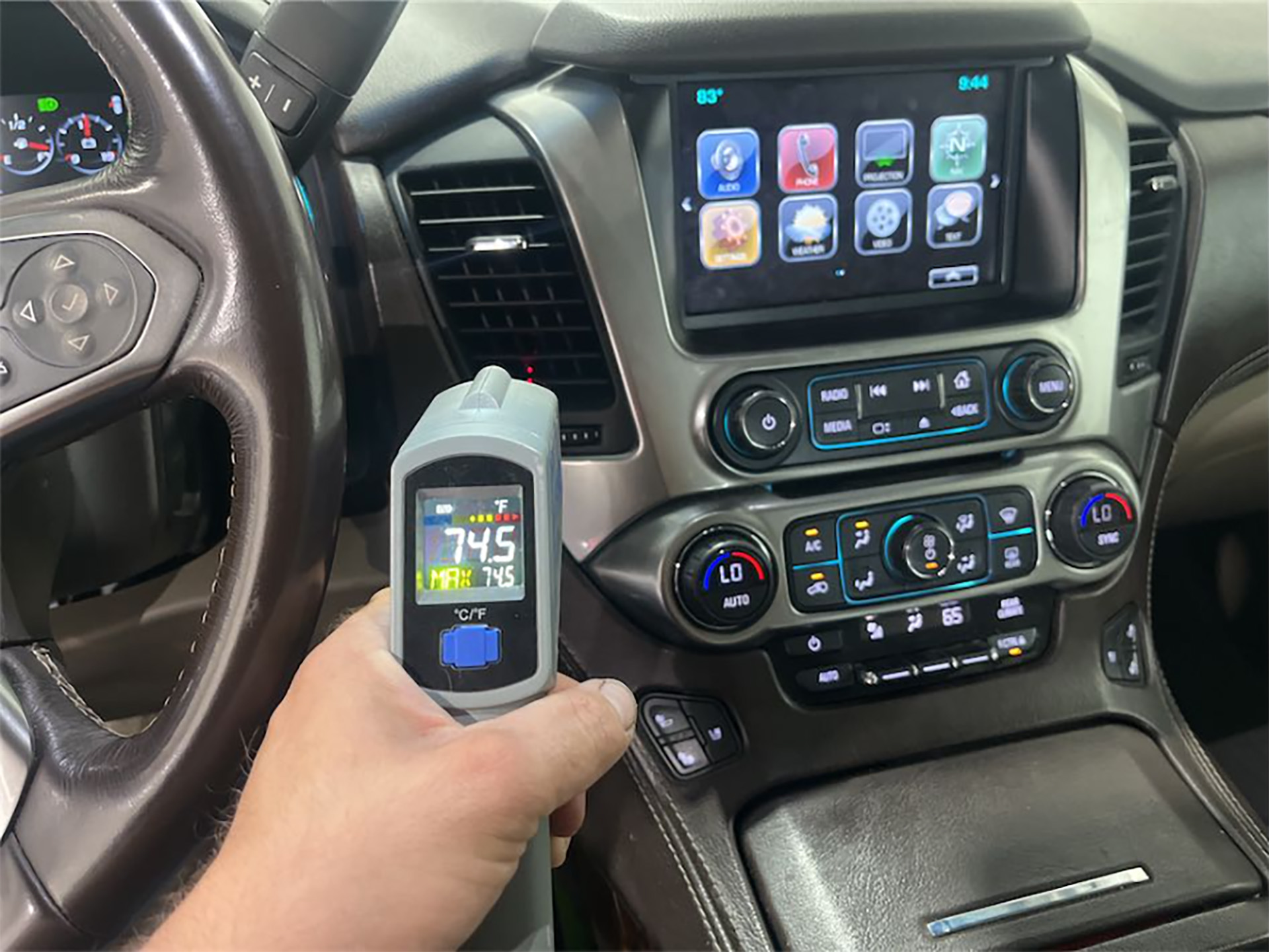
Testing Chevrolet Tahoe AC vents.
Testing Chevrolet Tahoe AC vents

If an air conditioning leak is suspected, our technicians look over the vehicle for any visible problems. 

They use an a/c machine and ultraviolet dye if no leaks are found. We add dye and oil, and then perform a recharge.

The vehicle is returned to the customer, who drives it for a while and returns it to our shop to see if the dye appears.

On cars that take R-1234yf, nitrogen and a sniffer are utilized.

HomeTowne Auto Repair & Tire is an authorized Michelin and BFGoodrich tire dealer located near Dale City, Virginia. Automotive repair services are performed on all makes and models, including oil changes, brakes, alignments, inspections, and computer engine diagnostics.

View Post

What can cause blower motor failure?

In Automotive Diagnostics by HomeTowne Auto Repair & Tire

When it feels like an oven outside, having a reliable stream of cool air flowing in your car is vital. Especially if you live or work in Northern Virginia and travel long distances.

The blower motor sends this sweet relief through the vents. If the part is malfunctioning, little or no air can make it to you and your passengers.

Bad blower motor signs

Is air not coming out of the vents when the air conditioning is turned on? Or is this a problem you’re experiencing off and on? The blower motor might be the culprit.

Here are common signs that this component needs to be replaced:

  • Poor air flow out of the vents
  • Rumbling, roaring or tapping noises
  • Vibration or humming sound

The main symptom of a bad blower motor is the air flow and air flow control. It can also make noise.

The motor is on a wheel. When the part goes bad and starts wobbling, you may hear a rumbling, roaring or tapping sound.

A vibration or a really loud humming noise is possible, too. This could mean that there’s an electrical problem or the motor isn’t balanced.

Blower motors have multiple speed settings. If one of them doesn’t work, it might be the motor or the resistor for the switch. 

Problems with the speed selection are going to be more on the resistor side, but that part goes hand and hand with the blower motor. A lot of times if one of them fails, the other goes with it.

Reasons why the motor goes bad

Time, wear and tear can cause this component to go bad. 

Blower motors are all sealed units. The only way you can prevent blower motor problems is making sure the cabin air filter is clean.

Over time, the cabin air filter collects dirt, twigs, leaves and other debris. If any of those items get through the filter, it can weigh down on the blower motor. Putting off cabin air filter replacement could cause the motor to work overtime and – eventually – fail. It’s also a good idea to clean out the cowling area regularly.

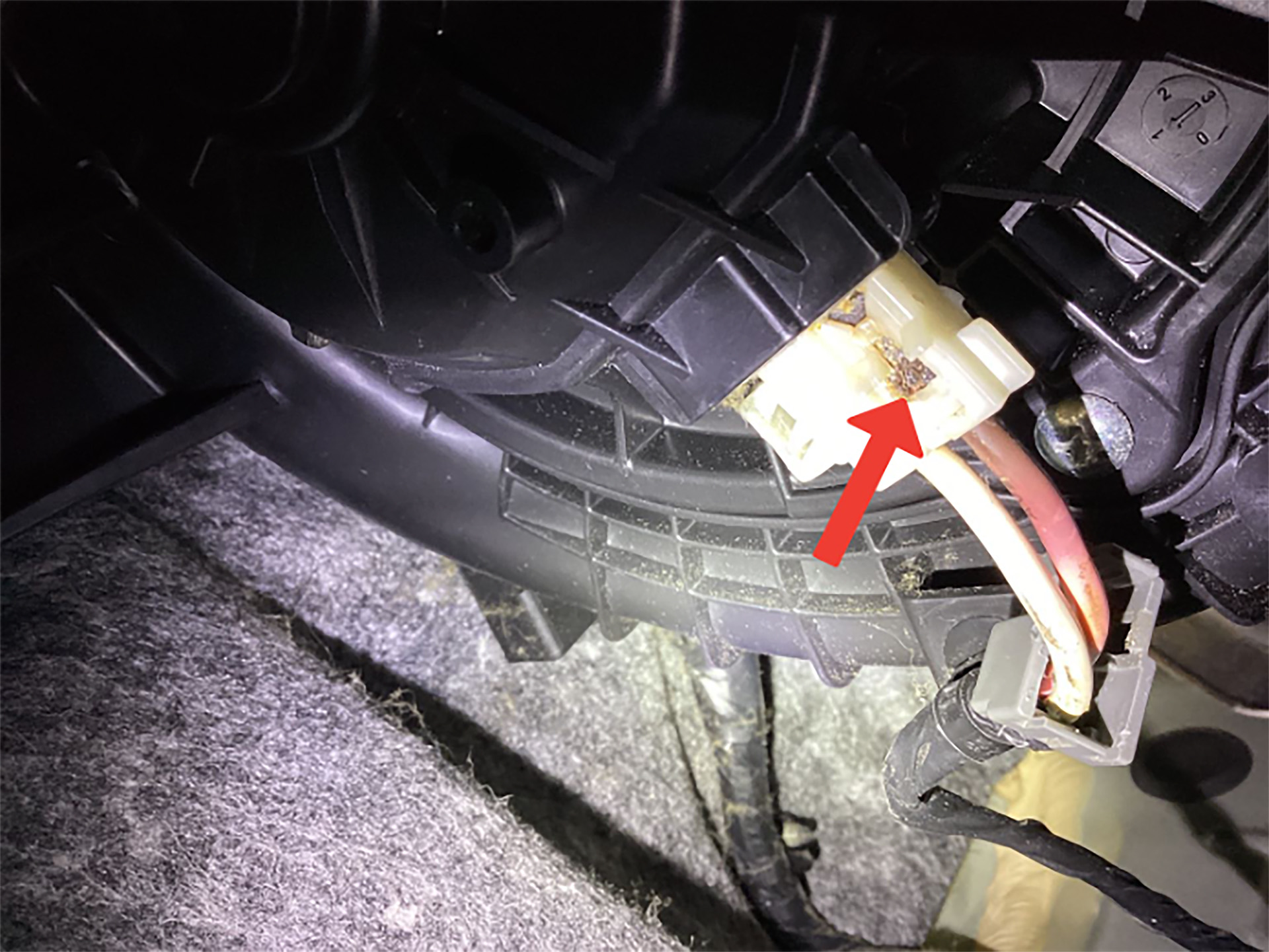
Resistor connector and blower motor connector melted together.
Resistor connector and blower motor connector melted together

Wiring problems can arise at times. You have your control panel. From there, you have a wiring harness that goes from the control panel to the resistor. The resistor is attached to the motor. You have a small area in the dashboard that has wires. 

However, the blower motor is very protected and secure. More than likely it’s a unit problem, rather than a communication issue.

The motor and resistor needed to be replaced on a Kia Sorento.

When investigating why the motor wasn’t working, we found that the resistor connector and blower motor connector were melted together.

A bad ground or a lack of resistance may lead to this issue.

Blower motor connector and connector inlet burnt together.
Blower motor connector and connector inlet burnt together

In the case of a Kia Forte, the blower motor connector and connection inlet had burnt with one another.

Rodents could bring their own challenges. You have vents that go into your evaporator box. Sometimes, rodents can get in and chew wires or set up a nest in the cabin air filter.

HomeTowne Auto Repair & Tire is an authorized Michelin and BFGoodrich tire dealer located near Dumfries, Virginia. Automotive repair services are performed on all makes and models, including oil changes, brakes, alignments, inspections, and computer engine diagnostics.
View Post

Rattling sound heard while driving

In Automotive Diagnostics by HomeTowne Auto Repair & Tire

Squeaks, groans, knocking, roars, clunks, grinding, squeals … As your car experiences wear from daily use, noises may begin to pop up.

These sounds can come from a variety of places, including your suspension, steering system, engine, tires or air conditioning system.

Rattling is one problem drivers might mention when dropping off their vehicle. Sometimes, our technicians notice it as they perform a digital inspection or test drive.

We worked on a Toyota Sienna that had a rattling sound. Diagnostic testing would be needed to determine the culprit.

What can cause a rattling sound?

Different sources may result in rattling noises. The symptom can be related to these components:

  • Air conditioning compressor
  • A/c compressor clutch
  • Belt pulleys
  • Brakes
  • Control arms
  • Rack bushings
  • Sway bar bushings
  • Sway bar end links
  • Tie rod ends
  • Timing chains

Air conditioning compressor: Rattling might indicate that the car has a bad a/c compressor or the a/c compressor clutch.

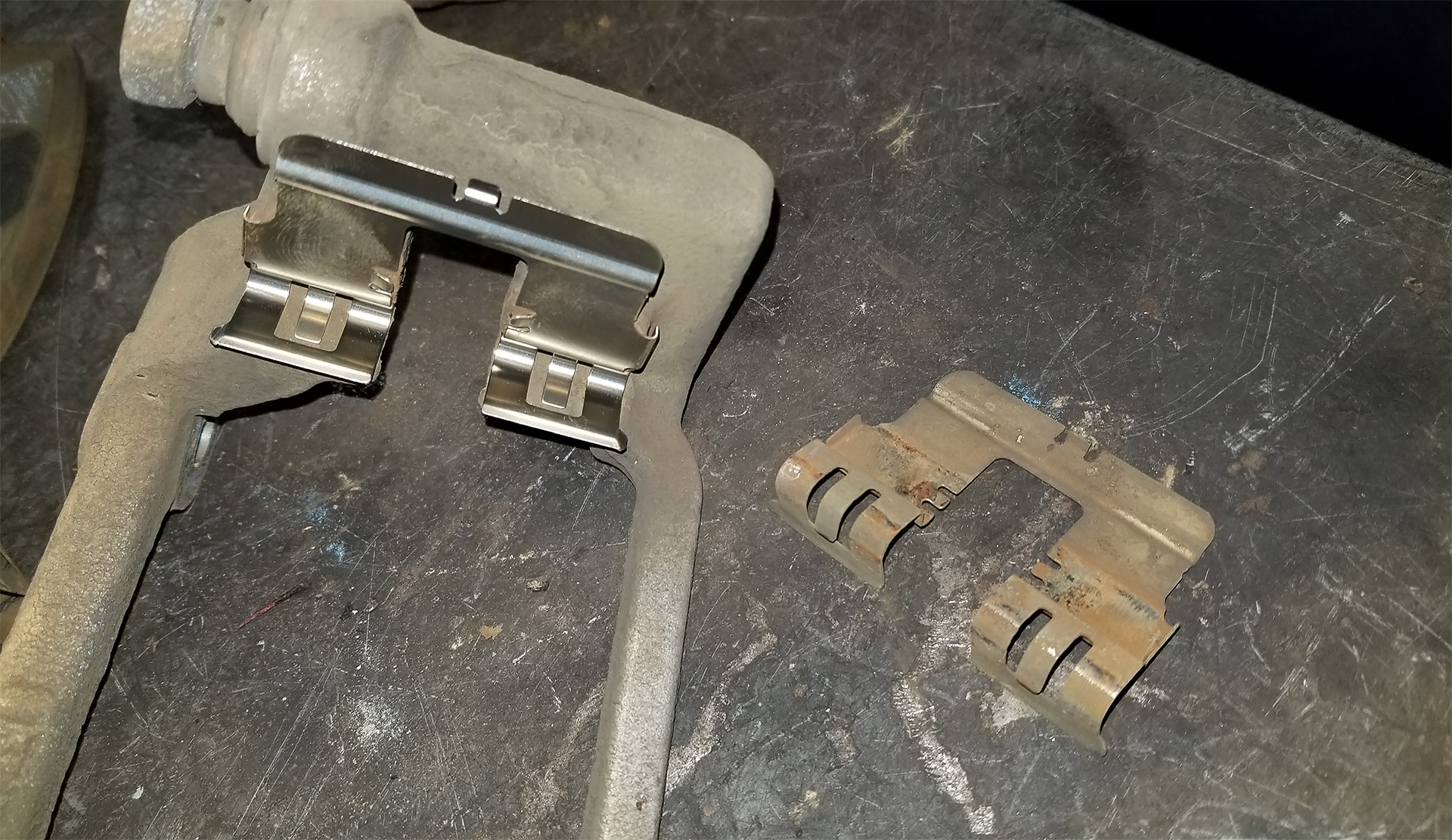
Brake hardware.
Brake hardware

Brakes: You could hear this noise if brake parts are loose or need to be lubricated. The brake hardware may also be broken.

Sway bar end links and bushings: Worn sway bar end links and sway bushings are potential causes too.

Timing chains: Loose timing chains may create rattling sounds, as well. This is usually the case when they’re tapping against the guides and tensioners.

It’s possible that other parts – like control arms, rack bushings and tie rod ends – have become worn overtime and need to be replaced.

The culprit behind rattling noises can also depend on certain vehicles. On Hyundais and Kias, there is a Technical Service Bulletin (TSB) for the steering coupler causing rattling in the steering wheel. 

Sometimes, the source isn’t related to a repair or part going bad. For example, it’s possible that items have gotten caught in the a/c vents.

Tracking down rattling noises

A rattling sound could take you down multiple avenues. When this indicator appears, our automotive technicians perform noise diagnostics to pinpoint the system it’s associated with and the specific culprit.

To narrow down the search, they inspect for any obvious problems, such as loose, worn or broken items. Then, they take information from the customer – like whether they hear it when braking, using the air conditioning system, going over bumps, or accelerating – and try to recreate the problem.

Cars make many sounds and these noises could come across differently to you than others. You might need to ride with a technician to help them determine what you’re hearing.

Every situation is going to be different and the specific steps taken for each car will vary.

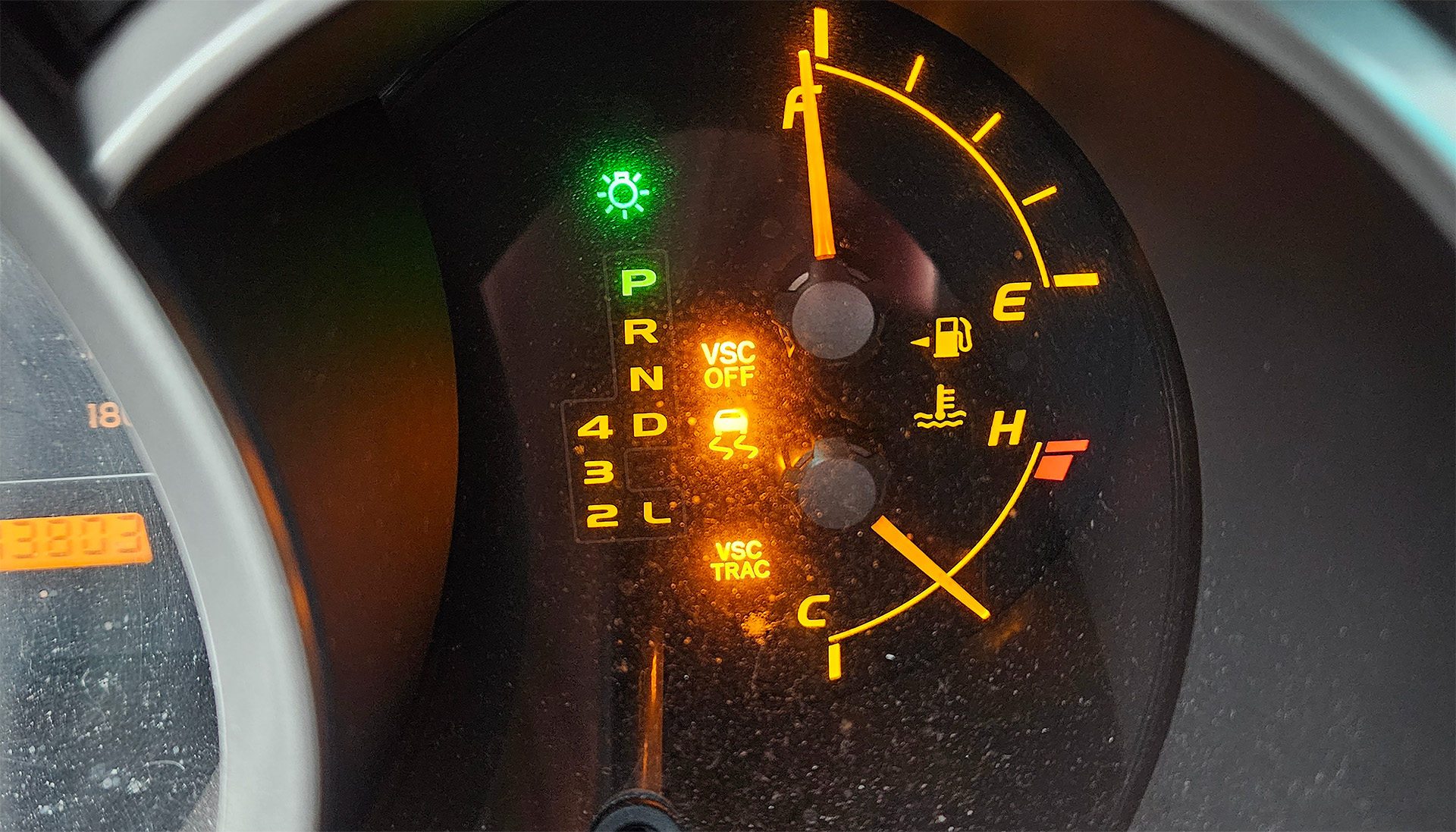
Warning lights

Traction control light and vehicle stability control light.
Vehicle stability control and traction control light

Sometimes, warning lights are associated with the problem. 

For example, if there’s something wrong with the steering or suspension, the ABS light or traction control light may turn on. Rattling that comes from the engine could result in a check engine light, ABS light or traction control light.

So, providing extra details when communicating with a repair shop (even if you feel like this information doesn’t matter) can help them figure out what’s going on in a timely manner.

HomeTowne Auto Repair & Tire is an authorized Michelin and BFGoodrich tire dealer located near Lake Ridge, Virginia. Automotive repair services are performed on all makes and models, including oil changes, brakes, alignments, inspections, and computer engine diagnostics.
View Post

Red brake light causes and diagnostics

In Automotive Diagnostics, Brakes by HomeTowne Auto Repair & Tire

We worked on a Toyota 4Runner that had its brake light turn on. 

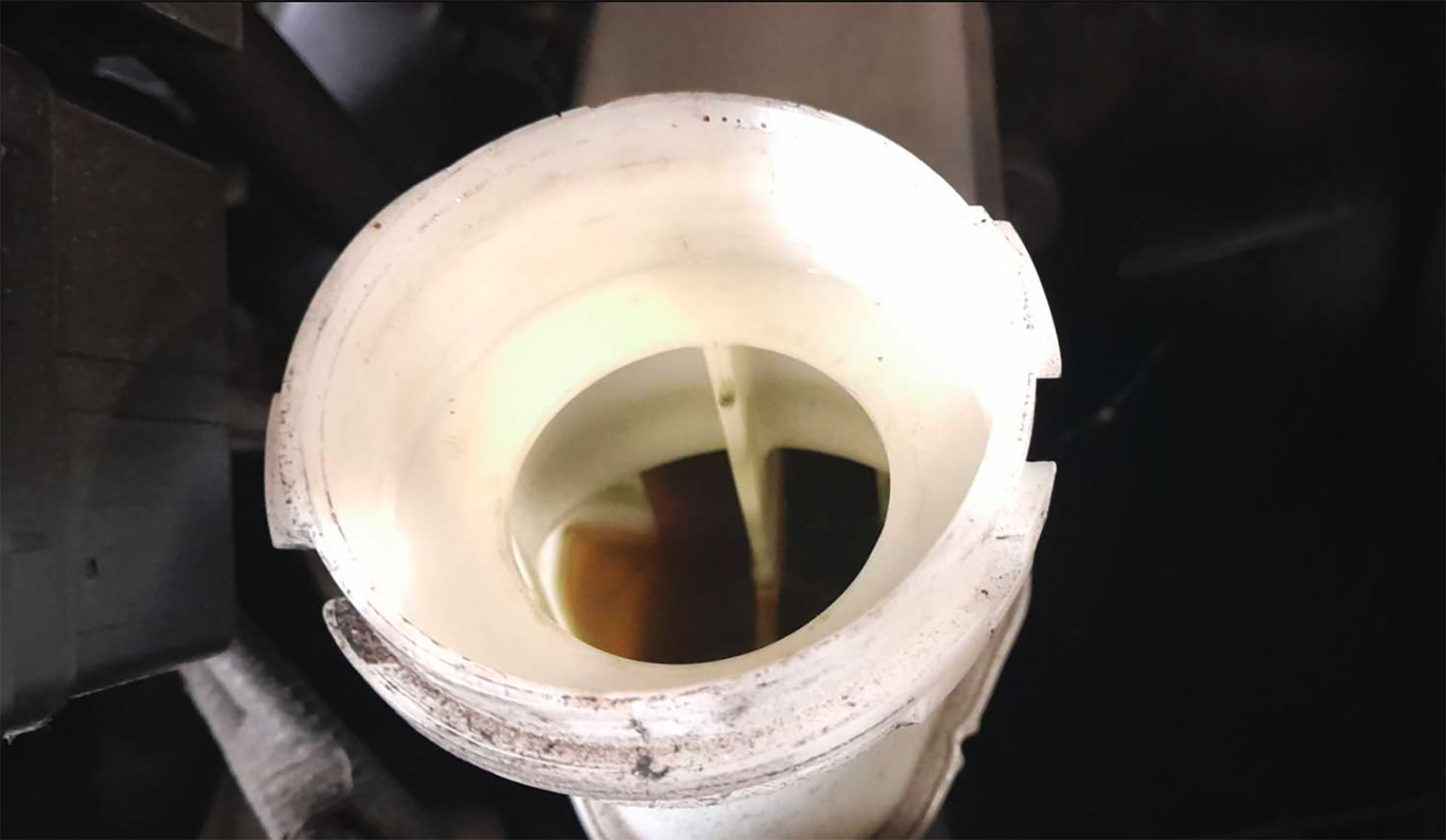
The brake pedal also didn’t feel right and the brake fluid reservoir was empty. Our technician didn’t see any brake fluid leaks.

Diagnostic testing was needed to determine the cause and any needed brake repair.

We started with a brake fluid exchange. This brought the brake fluid reservoir back to where it needed to be and restored the brake pedal.

Brake fluid exchange on a Toyota 4Runner.
Brake fluid exchange on a Toyota 4Runner

Why did my brake light turn on?

The red brake light is supposed to be appear when your parking brake is on. If it doesn’t turn off when you release the parking brake, it could be hinting at an underlying problem.

Parking brake system issues: If the red brake light stays on, you may have a switch problem in your parking brake pedal or handle. 

Electrical issue: On newer vehicles, it could indicate you have a parking brake issue because everything is electronic now. So, if the motor isn’t in the right position when you’re moving, it might throw that brake light on.

Low brake fluid: The brake light might also appear on your dashboard if the brake fluid isn’t at the right threshold.

Empty brake fluid reservoir on a Toyota 4Runner.
Empty brake fluid reservoir on a Toyota 4Runner

ABS problem: For some cars, an anti-lock braking system (ABS) issue will prompt a bunch of lights to come on – possibly the ABS light, traction control light, and brake light. It can be an extra indicator that something is going on.

Brake pads: European vehicles will have brake pad wear sensors that trigger the light when it hits a certain measurement and tells you that you need brake pads. 

What does diagnostic testing look like?

As we begin brake light diagnostics, we note any related concerns that a customer mentions.

Our technicians usually start with looking at the parking brake and brake fluid.

For the parking brake, we want to make sure the parking brake switch is disengaged and not sending a signal to the car saying the parking brake is on.

The brake fluid level is inspected, too. 

A code scan is also a part of the diagnostic process.

Our next steps will depend on what we find initially. A parking brake-related problem would lead us to check travel on the cable and the switch.

Low brake fluid might indicate a brake fluid leak. There could be an external leak, such as a fitting, line, or brake caliper. 

If we can’t see an external leak, we need to investigate internal leaks, which would be in the master cylinder. The master cylinder bolts to the booster that has a diaphragm. The brake fluid can go in there and you won’t see it because it gets burned up in the engine. 

Resolving brake problems

Does your braking system seem off? Maybe it’s taking longer to stop your vehicle. Some drivers feel like the brake pedal is going to the floor or they have a hard brake pedal.

You may also get brake pulsations in the front or the rear. This will feel like shaking in the steering wheel, pedal or seat.

Motorists might hear a grinding noise or squealing sound, as well.

Make sure to get any brake problems you’re experiencing checked out by an auto repair shop. They could find that nothing is wrong, or your car might be due for brake maintenance.

HomeTowne Auto Repair & Tire is an authorized Michelin and BFGoodrich tire dealer located near Dale City, Virginia. Automotive repair services are performed on all makes and models, including oil changes, brakes, alignments, inspections, and computer engine diagnostics.
View Post

HomeTowne Auto Repair invests in new scan tool

In Automotive Diagnostics, News by HomeTowne Auto Repair & Tire

When a vehicle receives a new part, sometimes the software needs an upgrade.

The technicians at HomeTowne Auto Repair & Tire are now able to move forward with these tasks.

We have invested in an OPUS IVS DrivePro 2. Like any other scan tool, this device provides us with live data. It also comes with other features, such as programming.

Features of our new scan tool

Using this device, our technicians can program and code new software.

Say we’re working on a Nissan with a mass airflow code. Maybe the mass airflow sensor is doing what it’s supposed to but the computer is manipulating the information in a different way. 

In this case, Nissan might say, “Oh, I see the problem – here’s an updated part. However, you have to change the parameters on the computer.” That’s what the new software does.

Master Technician using Opus IVS DrivePro 2.
Master Technician using Opus IVS DrivePro 2

Our new scan tool comes with built-in programs, which help speed up the diagnostic testing process.

It also has some AI-driven diagnostic procedures. This ensures that technicians at different levels don’t miss something when working on your vehicle.

Taking out roadblocks

One of our Master Technicians likes how the OPUS IVS DrivePro 2 gives us more capabilities.

When a manufacturer comes out with an update for one of the modules, we can go in and do it ourselves.

Being able to reprogram allows us to take care of our customers at the shop instead of sending them to the dealer.

Today’s vehicles are made up of many computers and modules. By keeping up with technology, we can continue to improve our diagnostic process.

That way, we can – in a more timely manner – get the keys back to where they’re supposed to be: in your hands.

HomeTowne Auto Repair & Tire is an authorized Michelin and BFGoodrich tire dealer located near Dale City, Virginia. Automotive repair services are performed on all makes and models, including oil changes, brakes, alignments, inspections, and computer engine diagnostics.

View Post

Uncommon causes behind car no start conditions

In Automotive Diagnostics by HomeTowne Auto Repair & Tire

Often, we hear and talk about common reasons when a car won’t start.

Usually, the answer is a simple problem – the battery dies, there’s a bad alternator, or the starter is on its way out.

What many of us don’t consider is that there can be deeper causes behind a no start condition. These can include:

  • Malfunctioning sensors
  • Issues with tone rings
  • Chewed wires

No start on an Audi

We worked on an Audi A5 that stopped running and wouldn’t turn back on.

It was brought in with many codes, including one for a high pressure fuel pump and a code related to the crankshaft synchronization.

Codes on an Audi A5.
Codes on an Audi A5

A new high pressure fuel pump and crank sensor were installed, but the vehicle still refused to restart.

The culprit was a water pump sensor that was shorting out, which was figured out just by happenstance.

On this engine, the crankshaft sensor, camshaft sensor and other sensors run off the same 5 volt reference. The technician noticed the water pump was starting to seep. When he unplugged the water pump, the vehicle started.

After we replaced the water pump, the car worked fine.

Uncommon reasons why a car won’t start

The problem with the Audi doesn’t happen everyday. (In fact, our Service Manager had never heard of this in 20 years of being in the automotive industry.)

There are other culprits that – every once in a while – can lead to a no start condition.

Your camshaft and crankshaft sensors are the most common sensors that will cause this issue. If the car reads that the cam or crank aren’t correct, it won’t allow you to turn it on because it can damage the vehicle.

Tone rings can also cause some problems. We heard about a car that wouldn’t run after a motor replacement. The tone rings the sensors read off of weren’t in the correct position.

There’s a tone ring for all of these sensors to work. If you put the wrong tone ring in with the wrong sequence, the vehicle will get confused and refuse to start.

Wiring problems can occur, too.

Rodents love the taste of rubber installation and sometimes chew through wires. A car can be sitting for a couple of days and they will nest in the valley of the engine (where it’s warm). 

A few times a year, we work on vehicles that have phantom problems. They won’t have any codes or a starting point, and we’ll stumble upon a small nest. In this article, we talk about signs of rodents and how to deter them from making themselves at home in your car.

Figuring out the cause

If your car isn’t starting when you first get in, start with the basics – try jumping it or attempting to start it multiple times. Note whether you hear a clicking sound.

In most cases, the reason why a car won’t start can quickly be determined. However, there can be situations where the problem isn’t so easily explained.

After performing an electrical test and checking the starter, an automotive technician may recommend diagnostic testing. This would include looking up any codes using a scan tool and tracking down problems from there.

HomeTowne Auto Repair & Tire is an authorized Michelin and BFGoodrich tire dealer located near Dumfries, Virginia. Automotive repair services are performed on all makes and models, including oil changes, brakes, alignments, inspections, and computer engine diagnostics.

View Post

Driveline service: How to take care of your vehicle

In Automotive Diagnostics, Vehicle Maintenance by HomeTowne Auto Repair & Tire

Whether you’re backing up or speeding ahead, your vehicle’s driveline is helping you get to your destination.

Every once in a while, driveline service is needed to keep you and your car on the road.

What is the driveline?

The driveline is responsible for moving a car forward or backward. How does it work? Well, there are different setups among vehicles.

Rear-wheel drive transmission.
Rear-wheel drive transmission

If you have a rear-wheel drive, the engine sends power to the transmission. The transmission gives the rotation to the driveshaft, which goes back to the rear differential. This causes the wheels to spin in whichever direction.

For front-wheel drive cars, power is transferred from the engine to the transmission and spins the axles.

On rear-wheel drive vehicles with all-wheel drive capabilities, to send the power or rotation to the front wheels, it needs to go through a transfer case and another drive shaft.

Front-wheel drive cars with all-wheel drive capabilities have a similar concept. Power goes from the engine to the transmission. The transfer case is either built into the transmission to go to the rear wheels or the transfer case is a separate unit that goes to the rear wheels.

Driveline problems we look for

We don’t look for one particular driveline problem when working on vehicles.

Front-wheel drive transmission.
Front-wheel drive transmission

Usually when a customer mentions a symptom, we can isolate it to a certain driveline component. Here are some examples:

Transmission: When it comes to the transmission, you could have slipping, shuddering, or hard shifts. Problems with switching gears and a grinding noise can be signs of a bad transmission.

Transfer case: If power isn’t getting to the rear drive shaft or front drive shaft, there may be a problem with the transfer case. Drivers might also notice a vibration or feel like their car is shaking when this part is bad.

Rear differentials and front differentials: The first thing you’re going to notice before it goes bad is noise, because those are rotating elements. You have bearings and gears that all flow together and are lubricated by fluid.

Driveline service and signs that it’s needed

Aside from a catastrophic failure, one of the most common driveline problems that drivers will notice is a roaring noise. It may sound like the tires are loud.

Vibration is another possible symptom. When driving at a certain speed and throttle position (or load), it might feel like you’re driving over a rumble strip.

Front differential for a four-wheel drive truck.
Front differential for a four-wheel drive truck

To ensure that the driveline continues working as designed, make sure that it receives needed maintenance overtime. You can take care of your driveline by regularly exchanging fluids on the transmission, transfer case and differentials. Sometimes, u joints may be serviced.

Our shop offers driveline service. This includes engine repairs, engine replacement, external transmission repairs, transmission replacement, and differential replacement. We also replace u joints, carrier bearings, and axle bearings. 

Transmission fluid exchanges, transfer case fluid exchanges, and differential fluid exchanges are some maintenance services our technicians perform.

So, if you think something is wrong with your driveline or it’s been a while since these components have been serviced, feel free to reach out to us.

HomeTowne Auto Repair & Tire is an authorized Michelin and BFGoodrich tire dealer located in Woodbridge, Virginia. Automotive repair services are performed on all makes and models, including oil changes, brakes, alignments, inspections, and computer engine diagnostics.

View Post

Car vibrations and other strange road manners

In Automotive Diagnostics by HomeTowne Auto Repair & Tire

One of our customers was driving their Hyundai Sonata when they noticed an abnormal circumstance: it seemed to be running at a higher rpm while at a stop light.

We performed a smoke test on the intake system and cleaned the throttle body. No problems were found and it didn’t appear to go outside of the expected parameters when at our shop.

The car could have been running higher at idle due to the very cold outside temperatures. Once it would reach operating temperature, the rpm’s were similar to what they should be at idle.

Hyundai Sonata running higher at idle.
Hyundai Sonata running higher at idle

This is one of several concerns drivers have expressed lately when dropping off their vehicles. Car vibrations are another behavior some are noticing.

What causes car vibrations?

During the wintertime, we will work on a few vehicles that are shaking. It might feel like the car has a vibrating steering wheel. 

When the problem occurs can vary – maybe it’s when a motorist is heading down the road at 40 to 50 miles per hour or they’re not moving at all.

There are many potential sources behind a shaking car. These include:

  • Axles
  • Axle shafts
  • Brake rotors
  • CV shafts
  • Differential (in rare cases)
  • Drive shafts
  • Hydraulic engine mounts
  • Rims
  • Tires
  • Transmissions
  • Wheels

Brake rotors: If a vehicle is only vibrating when braking, there may be something wrong with the brake rotors.

Drive shafts: Bad universal joints (or u-joints) are an example of what can cause a drive shaft to shake. Carrier bearings could go bad, as well.

Hydraulic engine mounts: Hydraulic engine mounts that don’t have enough fluid in them could result in car vibrations.

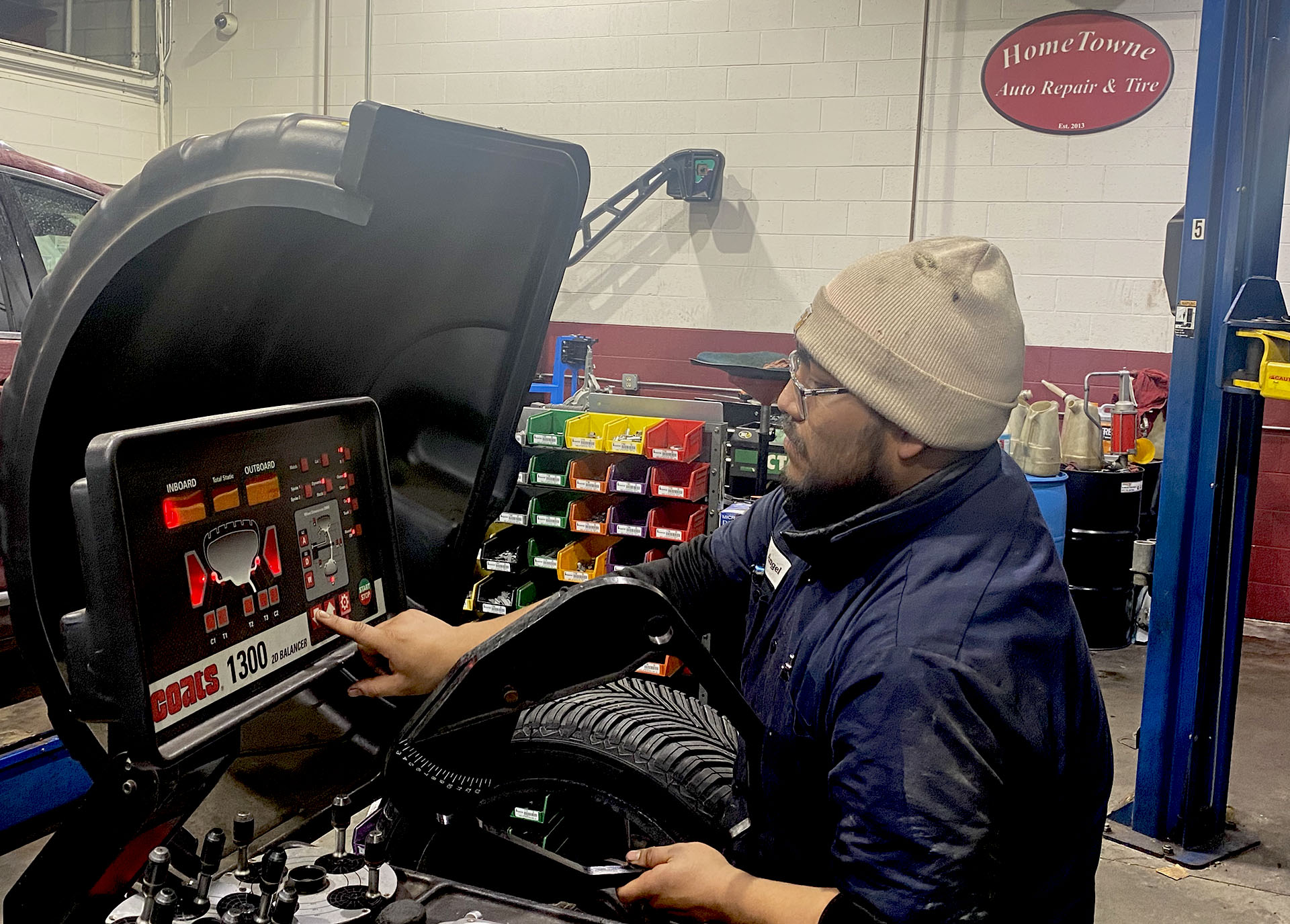
Apprentice Technician performing wheel balance on Michelin CrossClimate 2 Tire.
Apprentice Technician performing wheel balance on Michelin CrossClimate 2 Tire

Tires: Sometimes the problem has to do with the tires. A Chevrolet Silverado was brought in for a severe shaking symptom. After checking the driveline, one of our technicians removed the front two wheels. They didn’t have the correct weight distribution. 

Transfer case: A vibrating symptom may be the result of a bad transfer case, which links the transmission and front axle.

Wheels: Winter weather sometimes hits Northern Virginia during this season, so it is possible that snow has built up on the wheels, causing vibrations.

Diagnostic testing on road manners

Performing diagnostic testing on car vibrations and other behaviors is similar to how we address noise diagnostics.

After taking notes about a driver’s concern, we inspect the tires and wheels. If the technician doesn’t see any problems, they attempt to recreate a scenario where the problem occurs.

For example, if the shaking is felt at 40 miles per hour, our technicians conduct a test drive at that speed. If the vibration happens when idling or at a traffic light, they may leave the car in park or go on a road that has traffic lights.

The process can vary based on the road manner and may include different tests to narrow down the cause. If an autoshop recommends diagnostic testing, ask them what the steps look like for your situation.

As with noise diagnostics, the more details you are able to provide about the issue and when you notice it, the better!

HomeTowne Auto Repair & Tire is an authorized Michelin and BFGoodrich tire dealer located near Lake Ridge, Virginia. Automotive repair services are performed on all makes and models, including oil changes, brakes, alignments, inspections, and computer engine diagnostics.

View Post

Why did my car’s ABS light come on?

In Automotive Diagnostics by HomeTowne Auto Repair & Tire

Whether you’re turning, stopping or accelerating, a vehicle’s anti-lock braking system (ABS) is operating, unnoticed.

It makes sure that the tires are moving at the same relative speed, based on the vehicle’s actions. For example, if you’re turning left to drive around a corner, the right wheels are going faster than the left ones. 

The computer takes that data and sends it to the power control module (PCM) or engine control module (ECM). Information is constantly provided in real time, so if the computer needs to take over and engage the ABS to keep your wheels from locking up it will do that. 

How the ABS system works

Before we go into what triggers the ABS light, we want to talk more about how the system operates.

On most cars that use four-wheel ABS, each wheel has a sensor. The sensor doesn’t just know how fast the wheel is spinning. The magnetic piece picks up high points on a tone ring that’s located in the bearing, on the axle, or on a nearby component that rotates.

Let’s say all four wheels on a vehicle are going 40 miles an hour and the car notices the brake was applied and one of the tire speeds drops down to 22 miles an hour. The ABS has a modulator valve that pulses the brake fluid, freeing up the wheel and preventing it from locking up.

What causes the ABS light to turn on?

The ABS light can appear on your dashboard for many reasons. These include:

  • Low brake fluid
  • Bad sensors
  • Flaws in the main computer
Low brake fluid on a Honda Pilot.
Low brake fluid on a Honda Pilot

You may see this symbol when the car says it doesn’t have enough information to make a decision. If you step on the gas at a traffic light and 3 wheels are traveling at 30 miles per hour while 1 is going 0, the car will realize something is wrong and trigger the light.

A vehicle needs to perform certain calculations to determine if the information received is possible. Once it notices that some part of the system is not plausible or has an open circuit, it’s going to trigger the light every single time.

You can have an erratic signal where the ABS system is engaging when it’s not supposed to. That could mean you have a damaged tone ring or an issue with the component that sends information from the sensor.

Problems outside of the ABS can play a role, too. If your traction control system isn’t working, it’s also going to shut down the ABS system.

Connection problems can also lead to the icon appearing.

ABS sensors rarely get manipulated or move. They will sit in one spot for a really long time. We’ve seen corrosion build up so much that it pushes the sensor away from the tone ring. The light turns on because it’s an implausible situation for the computer – as if it’s saying, “I know we’re moving, but I’m barely picking up on this tone ring. Something’s wrong.”

Diagnosing ABS problems

We begin ABS diagnostics by making sure the vehicle has proper battery voltage, good battery connections, and clean terminals.

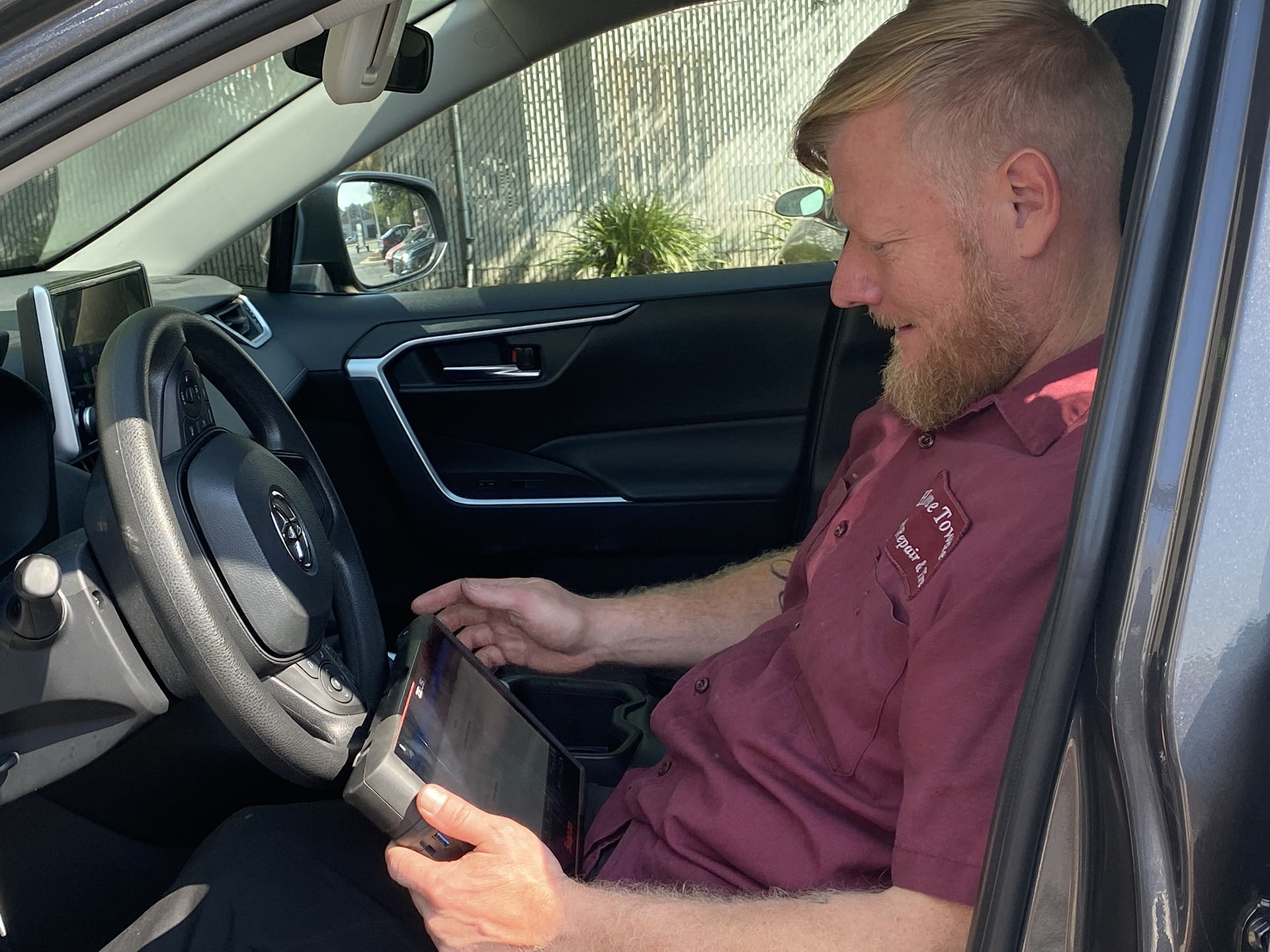
Master Technician using the scan tool on a Toyota RAV4.
Master Technician using the scan tool on a Toyota RAV4

The computer is scanned while our technicians are checking these items and making sure no fuses are blown.

Any codes that appear act as a starting point. From there, the diagnostic process can branch out into various directions.

After receiving codes, we see if there’s anything implausible or multiple problems are occurring.

If your car’s ABS light has turned on, bring it by a nearby autoshop to make sure that the ABS system is working the way it was designed. 

HomeTowne Auto Repair & Tire is an authorized Michelin and BFGoodrich tire dealer located near Dale City, Virginia. Automotive repair services are performed on all makes and models, including oil changes, brakes, alignments, inspections, and computer engine diagnostics.